


 English
 中文简体
中文简体 русский
 Español
 Deutsch
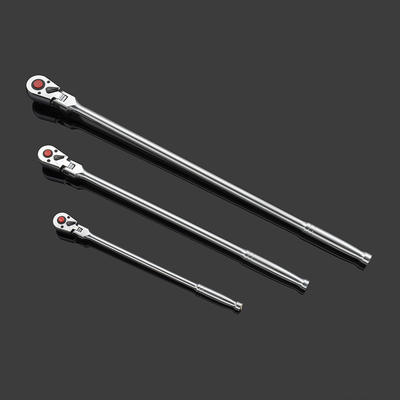
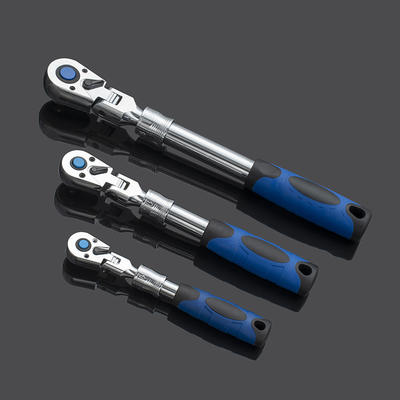
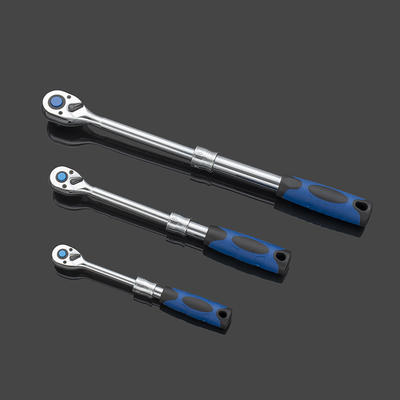
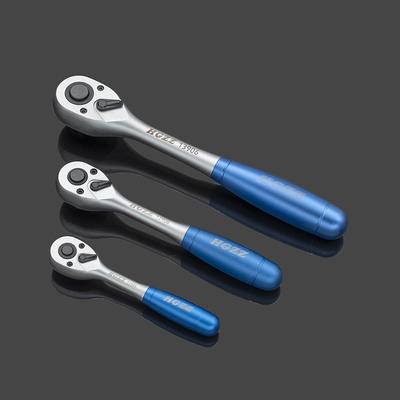
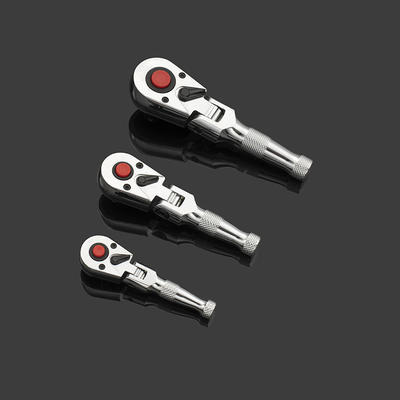
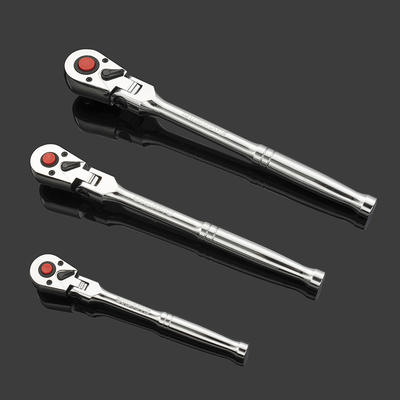
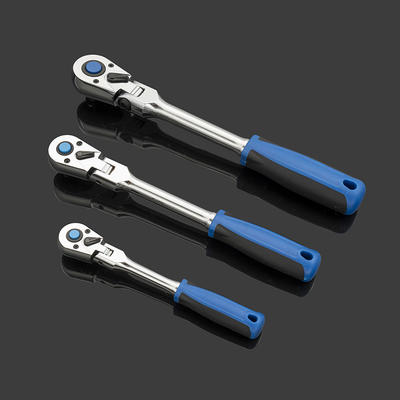
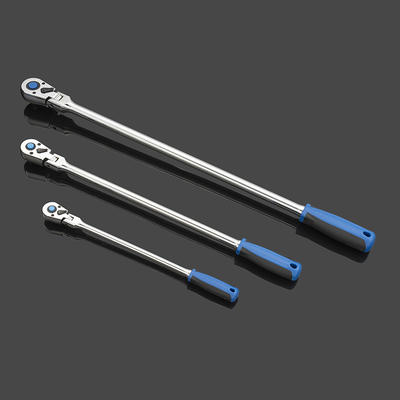
Flexible head extra long ratchet handle
Gear head material 42CrMo is a kind of steel type, belongs to ultra-high strength steel, high streng...
The flexible head extra long ratchet handle is an essential tool in many professional and industrial settings. Its unique design and extended reach provide significant advantages over traditional fixed-head ratchet handles.
A flexible head extra long ratchet handle is designed to provide enhanced maneuverability and access in confined or hard-to-reach spaces. Unlike fixed-head ratchet handles, which maintain a rigid head orientation, flexible head versions incorporate a pivoting or adjustable head. This flexibility allows the handle to adapt to multiple angles, reducing strain and improving efficiency during operation.
The extended handle length of these tools also contributes to greater leverage, enabling users to apply torque more effectively with less effort. These characteristics make flexible head extra long ratchet handles popular among mechanics, assembly line workers, and maintenance professionals.
The primary distinction between flexible head extra long ratchet handles and fixed-head versions lies in the design of the ratcheting head. While fixed-head ratchets have a stationary head, flexible head variants incorporate a pivoting mechanism that allows rotation along multiple axes. This feature provides the following structural benefits:
The handle construction of flexible head extra long ratchet handles also emphasizes strength and durability. Materials commonly used include chrome-vanadium steel or high-grade alloy steel, providing both toughness and resistance to wear.
The ratcheting mechanism itself differs in both design complexity and functionality between flexible and fixed-head versions.
In a fixed-head ratchet, the mechanism is straightforward. A gear and pawl system allows rotational motion in one direction while preventing motion in the opposite direction. Users rely on the rigid alignment of the head with the handle to transmit torque directly to the fastener.
While effective in many situations, the fixed alignment limits the tool’s adaptability. Operators often need to reposition the handle or their body to access fasteners, which can be cumbersome in confined spaces.
A flexible head extra long ratchet handle incorporates additional components to allow angular adjustment without compromising torque transfer. The ratchet mechanism includes a pivoting joint, often with a locking or detent system, enabling the head to swivel and hold multiple positions.
Key benefits of this design include:
These advantages make the flexible-head mechanism particularly valuable in automotive repair, industrial assembly, and maintenance operations.
The flexible head extra long ratchet handle often requires precise engineering to maintain strength while allowing movement. Key material and construction considerations include:
Manufacturers may incorporate a combination of materials and treatments to balance flexibility, durability, and user comfort.
The flexible design of flexible head extra long ratchet handles opens up applications where fixed-head ratchets may be impractical:
In all these scenarios, the flexible head allows professionals to maintain efficiency while reducing physical strain. The extended handle length also provides better leverage, making it easier to apply consistent torque without excessive effort.
| Feature | Flexible head extra long ratchet handle | Fixed-head ratchet handle |
|---|---|---|
| Head orientation | Adjustable, pivoting | Fixed, rigid |
| Access to tight spaces | High | Moderate |
| Ergonomics | Reduces strain | Can require awkward positioning |
| Handle leverage | Long handle enhances torque | Standard handle length |
| Mechanism complexity | Includes pivot joint | Simple gear and pawl |
| Versatility | High | Limited |
| Maintenance | Requires periodic inspection of pivot joint | Minimal |
This table highlights the practical differences in usability and performance between the two types of tools.
When selecting a flexible head extra long ratchet handle, buyers should consider the following factors:
Proper evaluation ensures that professionals select a tool that maximizes efficiency, safety, and lifespan.
To maintain optimal performance of a flexible head extra long ratchet handle, follow these practices:
Consistent care extends the service life and preserves the functionality of the ratchet handle.
The flexible head extra long ratchet handle provides significant advantages over fixed-head versions through its pivoting mechanism, extended handle length, and ergonomic design. By allowing access to tight spaces, reducing strain, and improving torque efficiency, it has become an essential tool for professionals in automotive, industrial, and construction sectors.
Understanding the structural and mechanical differences, as well as the maintenance and operational considerations, enables buyers and users to make informed decisions and select the right tool for their specific needs. Whether addressing challenging fasteners in confined areas or performing repetitive tasks, the flexible head design offers versatility and reliability that fixed-head ratchet handles cannot match.
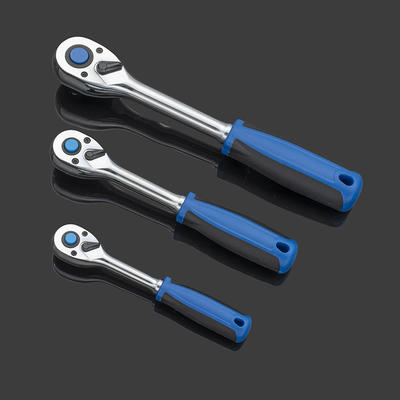
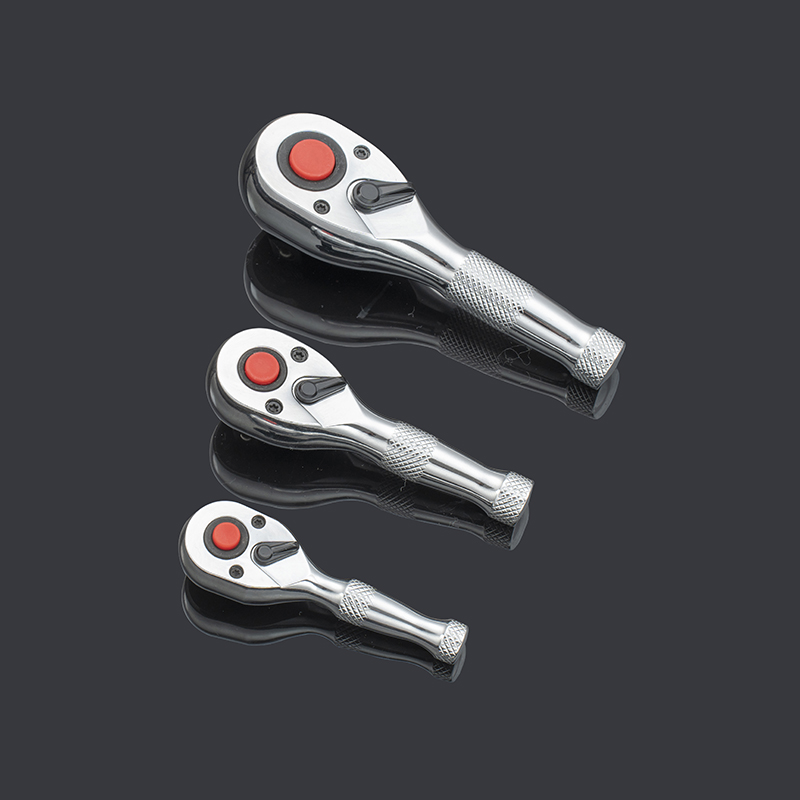
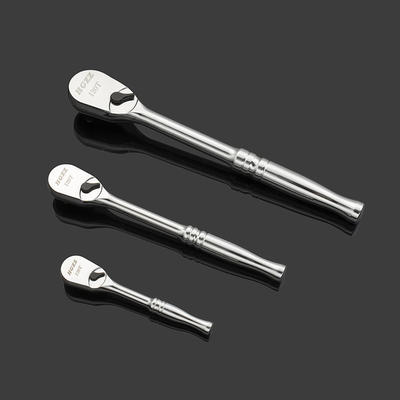

Committed to the production of torque wrenches, ratchet wrenches, sleeve tool sets and other auto and hand tools products.
 Add: Yiqiao Town, Xiaoshan District, Hangzhou City, Zhejiang Province, China. 311256
 Tel: +86-18072832111
 E-mail: [email protected]
Copyright ©2023 Hangzhou Hao Gong Tools Co., Ltd. All Rights Reserved
Mini Ratchet & Digital Torque Wrench Set Suppliers
