


 English
 中文简体
中文简体 русский
 Español
 Deutsch
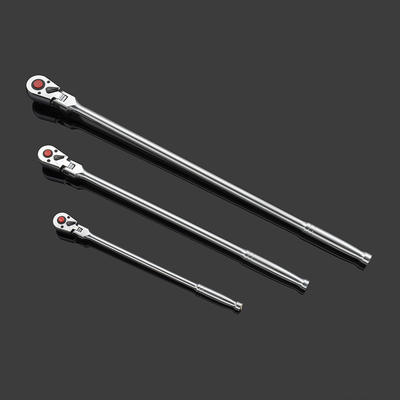
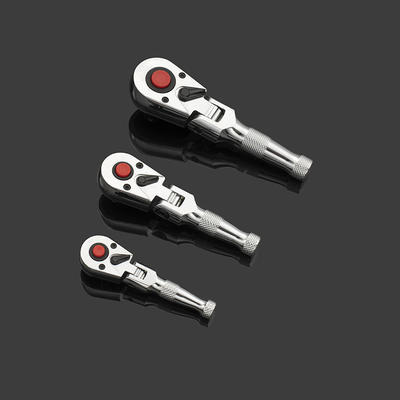
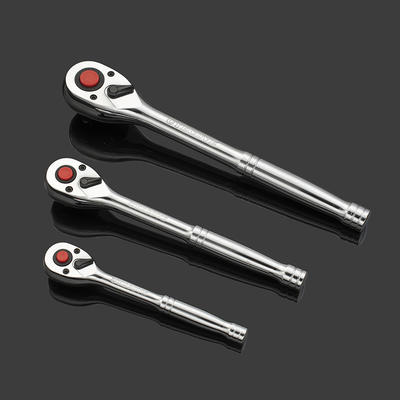
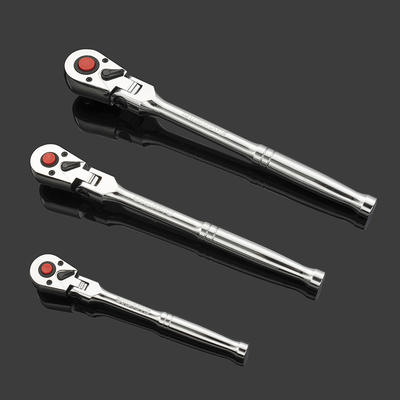
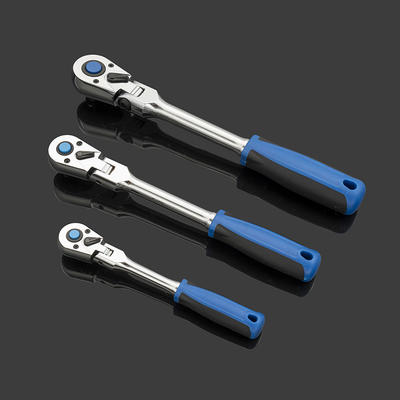
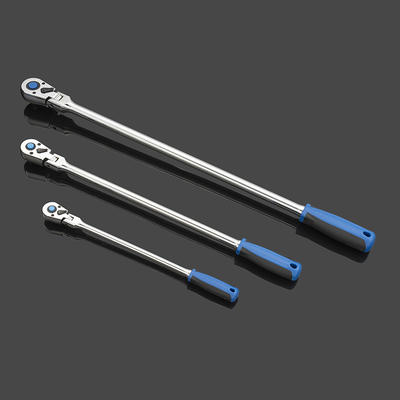
Flexible head extra long ratchet handle
Gear head material 42CrMo is a kind of steel type, belongs to ultra-high strength steel, high streng...
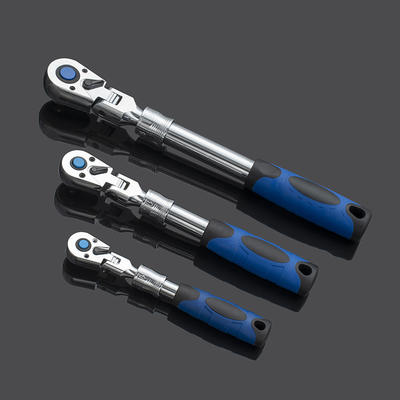
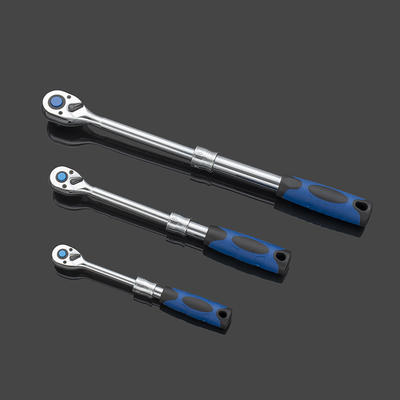
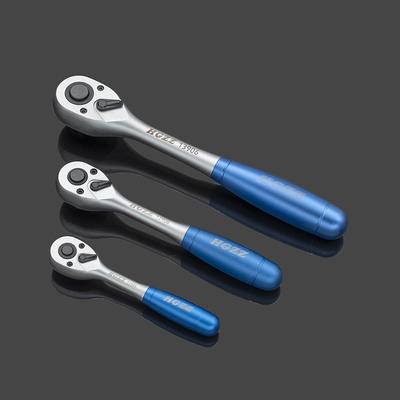
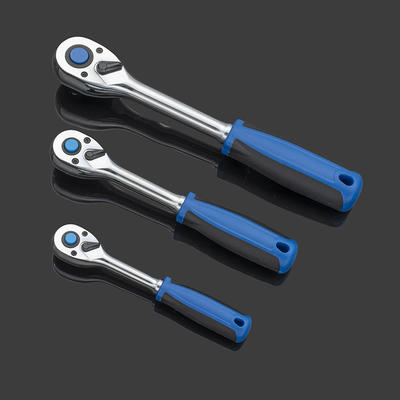
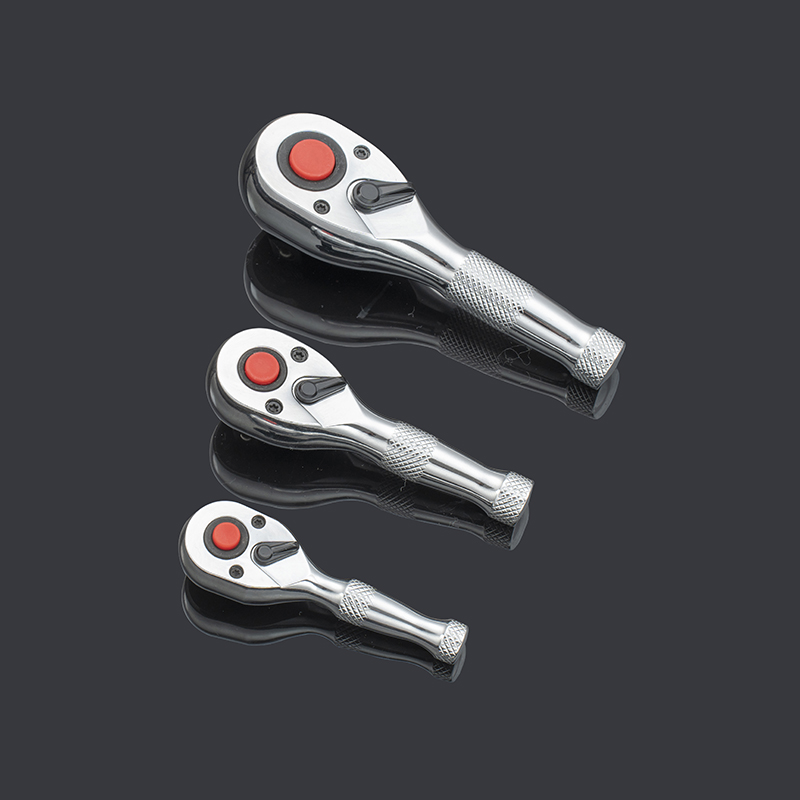
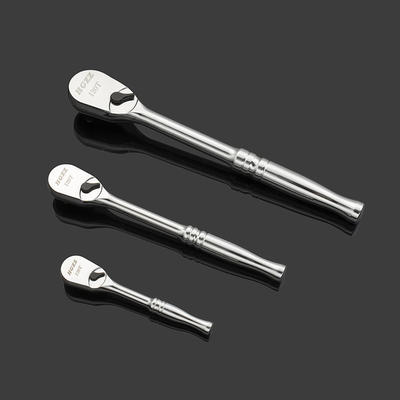
The aluminum handle ratchet wrench is a widely used tool in both professional and DIY applications. Its lightweight design, durability, and ergonomic handle make it a preferred choice in various mechanical, automotive, and industrial contexts. Among the types of aluminum handle ratchet wrench, two main categories exist: fixed and reversible.
The aluminum handle ratchet wrench is primarily designed to provide torque in a controlled manner, enabling users to fasten or loosen bolts and nuts efficiently. The aluminum construction offers several advantages over traditional steel or alloy handles, including lighter weight, resistance to corrosion, and reduced user fatigue. These wrenches are available in various drive sizes, such as 1/4-inch, 3/8-inch, and 1/2-inch, and are often accompanied by accessory sockets and extensions to increase versatility.
Key features of aluminum handle ratchet wrench include ergonomic grip, ratchet mechanism, and durable aluminum alloy construction. These elements contribute to the tool’s ability to perform repetitive tasks without significant strain on the operator. Additionally, the compact head design allows access to confined spaces, a critical factor in automotive repair and machinery maintenance.
A fixed aluminum handle ratchet wrench has a non-reversible mechanism, meaning the ratchet operates in a single rotational direction. The direction of rotation is predetermined, and the wrench must be removed and repositioned to operate in the opposite direction. This type of wrench is characterized by simplicity and stability, which can provide a more robust torque application in certain scenarios.
The fixed type typically consists of an aluminum handle attached to a ratchet head containing a pawl and gear system. Since the mechanism does not allow reversal, there are fewer internal components, reducing the potential for mechanical failure. The handle design is often optimized for maximum torque transfer, ensuring that the applied force is efficiently transmitted to the fastener.
Fixed aluminum handle ratchet wrench is commonly employed in environments where repeated motion in a single direction is required, such as assembly lines or specific machinery adjustments. Its simplicity reduces the need for frequent adjustments, making it suitable for high-volume or repetitive tasks. Moreover, users often prefer fixed ratchets in tight spaces where directional switching might be cumbersome.
The primary advantage of fixed wrenches is the stability and direct torque transfer. Fewer moving parts also translate to enhanced durability and lower maintenance requirements. However, the inability to reverse the ratchet direction can be a limitation in dynamic work environments requiring frequent switching between tightening and loosening fasteners.
In contrast, a reversible aluminum handle ratchet wrench features a switch mechanism that allows the user to change the ratcheting direction without removing the tool from the fastener. This design increases efficiency, particularly in applications where frequent changes in direction are necessary.
The reversible mechanism introduces an additional control lever or dial that engages or disengages the pawl system, allowing rotation in both clockwise and counterclockwise directions. While slightly more complex than fixed designs, this feature provides flexibility for dynamic mechanical operations. The aluminum handle continues to provide lightweight handling and corrosion resistance, while the ratchet head is engineered for smooth, precise motion.
Reversible aluminum handle ratchet wrench is ideal for automotive repair, mechanical maintenance, and assembly tasks where users must frequently switch between tightening and loosening fasteners. The ability to reverse direction quickly reduces work time and increases operational efficiency. Additionally, the reversible design is advantageous in confined spaces where repositioning the tool is difficult.
The main advantage of reversible wrenches lies in their versatility and time-saving functionality. Users can operate in both directions without repositioning the wrench, making it suitable for diverse mechanical tasks. The drawback is a slightly more complex internal mechanism, which may require careful maintenance to prevent wear and ensure long-term reliability.
A clear understanding of the differences between fixed and reversible types is essential for effective tool selection. The following table summarizes the key distinctions:
| Feature | Fixed Aluminum Handle Ratchet Wrench | Reversible Aluminum Handle Ratchet Wrench |
|---|---|---|
| Ratchet Direction | Single | Bi-directional (switchable) |
| Internal Mechanism | Simple | More complex |
| Torque Efficiency | High | Moderate due to additional mechanism |
| Maintenance | Low | Moderate, requires periodic lubrication |
| Best Use Case | Repetitive single-direction tasks | Dynamic tasks requiring frequent direction change |
| Weight | Slightly lighter | Slightly heavier due to switch mechanism |
| Durability | High | High but depends on proper maintenance |
| Cost | Generally lower | Generally higher |
Another perspective can be drawn from user efficiency and ergonomics, as shown in Table 2:
| Aspect | Fixed Type | Reversible Type |
|---|---|---|
| Ease of Use in Tight Spaces | Moderate | High |
| Work Speed in Repetitive Tasks | Moderate | High if directional changes are frequent |
| User Fatigue | Low | Low to moderate depending on usage |
| Learning Curve | Minimal | Slightly higher due to switch operation |
| Tool Versatility | Low | High |
These comparisons demonstrate that while both types share the benefits of aluminum handle ratchet wrench, including lightweight design, ergonomic handling, and corrosion resistance, they serve distinct operational needs. Buyers must evaluate their specific application scenarios to determine the most suitable type.
Both fixed and reversible aluminum handle ratchet wrench benefit from the inherent properties of aluminum. Aluminum alloy handles reduce fatigue during extended use, offer natural corrosion resistance, and maintain structural integrity under high torque. Ergonomically, handles are often designed with textured grips or contoured shapes to enhance user comfort and reduce slippage during operation.
The choice between fixed and reversible also influences ergonomics. Fixed wrenches may require repositioning to change direction, potentially causing minor strain over prolonged use. Reversible wrenches minimize repositioning, but the added switch mechanism must be comfortably operated, particularly in confined spaces.
Maintenance practices for aluminum handle ratchet wrench are critical for ensuring long-term performance. Fixed wrenches, with their simpler mechanism, typically require minimal care, such as periodic cleaning and light lubrication of the gear system. Reversible wrenches require slightly more attention due to the additional pawl and switch assembly, which should be inspected for wear and debris accumulation.
Proper maintenance contributes to the tool’s longevity, preserves smooth ratcheting action, and ensures consistent torque application. Additionally, the aluminum handle should be kept clean to prevent surface damage or corrosion from harsh environments.
When selecting between fixed and reversible aluminum handle ratchet wrench, several factors should be considered:
Both fixed and reversible aluminum handle ratchet wrench offer unique advantages tailored to specific operational needs. The fixed type prioritizes simplicity, durability, and consistent torque, making it suitable for repetitive single-direction tasks. The reversible type enhances versatility and efficiency, particularly for dynamic applications requiring frequent directional changes.
Q1: Can aluminum handle ratchet wrench be used in automotive repair?
Yes, both fixed and reversible types are widely used in automotive applications, with reversible wrenches providing efficiency in frequent tightening and loosening tasks.
Q2: How do I maintain a reversible aluminum handle ratchet wrench?
Regular cleaning, light lubrication of the ratchet mechanism, and inspection of the switch assembly are recommended to ensure smooth operation.
Q3: Is a fixed aluminum handle ratchet wrench suitable for high-torque applications?
Yes, fixed wrenches provide direct torque transfer and are generally more robust for continuous single-direction operations.
Q4: How do I choose the right drive size?
Select the drive size based on the fastener dimensions and required torque. Common sizes include 1/4-inch, 3/8-inch, and 1/2-inch.
Q5: What is the advantage of an aluminum handle over steel?
Aluminum handles reduce weight, resist corrosion, and decrease user fatigue while maintaining sufficient strength for most mechanical tasks.

Committed to the production of torque wrenches, ratchet wrenches, sleeve tool sets and other auto and hand tools products.
 Add: Yiqiao Town, Xiaoshan District, Hangzhou City, Zhejiang Province, China. 311256
 Tel: +86-18072832111
 E-mail: [email protected]
Copyright ©2023 Hangzhou Hao Gong Tools Co., Ltd. All Rights Reserved
Mini Ratchet & Digital Torque Wrench Set Suppliers
