


 English
 中文简体
中文简体 русский
 Español
 Deutsch
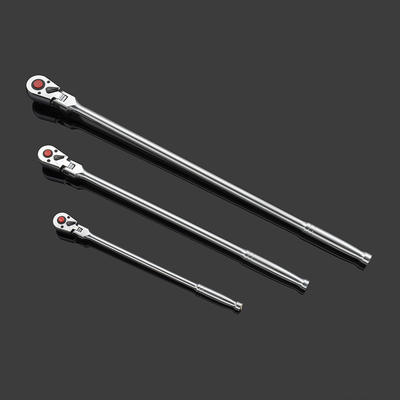
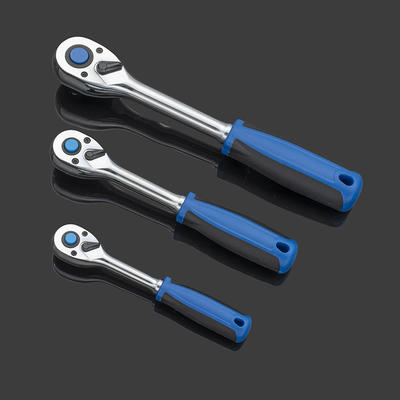
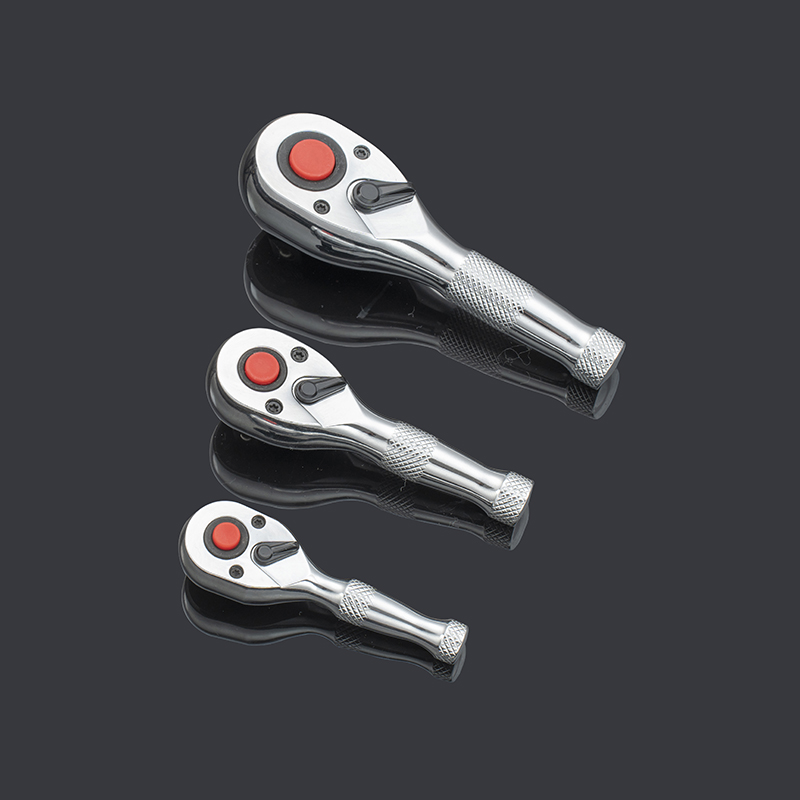
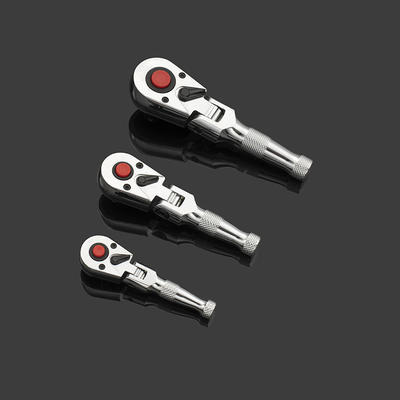
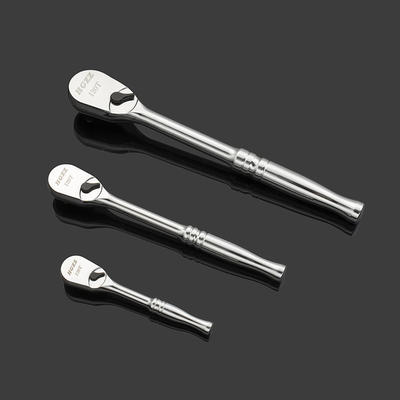
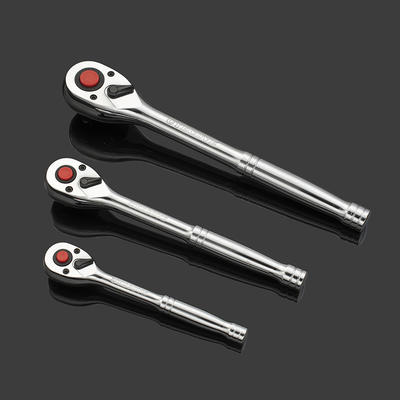
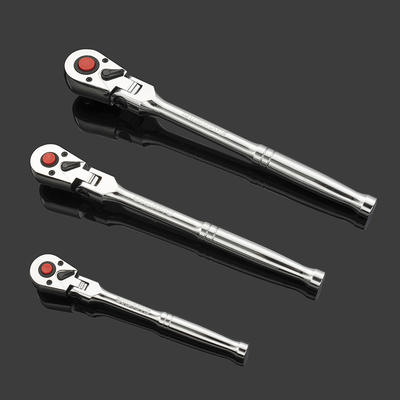
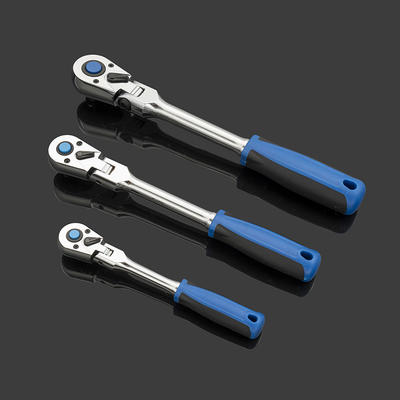
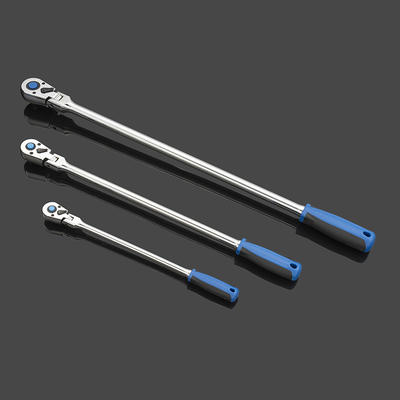
Flexible head extra long ratchet handle
Gear head material 42CrMo is a kind of steel type, belongs to ultra-high strength steel, high streng...
Precision tightening is fundamental across mechanical assembly, aerospace structures, industrial automation equipment, and high‑reliability systems. Torque control — the measurement and delivery of a rotational load — ensures joint integrity, prevents fastener failure, and maintains system performance over product lifecycles.
Within industrial tightening tools, mechanical torque screwdriver and digital torque screwdriver solutions are widely employed. While both are designed to apply torque to threaded fasteners, they differ in how torque is regulated, measured, and validated. Evaluating how accurate mechanical torque screwdrivers are versus digital ones requires a holistic view of system engineering factors: physical mechanisms, calibration strategies, human interaction, environmental conditions, and quality traceability.
Torque accuracy refers to the degree to which the applied torque matches the intended setpoint value. Within precision assembly, accuracy is assessed by the deviation between measured and desired torque, expressed as a percentage of the target value.
Accuracy is often accompanied by repeatability — the consistency with which a tool applies the same torque across multiple operations — and traceability — the ability to validate calibration history against recognized standards.
Key performance dimensions include:
These dimensions interplay with the tool’s mechanical design, measurement method, and human or automated control interface.
A mechanical torque screwdriver regulates torque through a mechanical feedback mechanism. The most common type uses a spring‑loaded clutch or preset cam system that disengages drive once the internal torsion element reaches a specified torque threshold.
Key internal components:
The torque setpoint is established by mechanical adjustment — typically a calibration screw or dial — which changes the preload on the torsion element. Once the clutch engages, mechanical limits prevent additional torque transfer.
This inherently binary behavior (engage / disengage) defines how these tools operate: an operator applies rotation until the clutch activates, and motion stops. Torque beyond the setpoint is restrained.
Mechanical torque regulation provides:
Mechanical systems are often preferred in environments where simplicity, durability, and resistance to harsh conditions (dust, moisture, temperature extremes) are important.
However, the mechanical approach introduces constraints:
These factors affect accuracy when compared to systems that incorporate real‑time measurements.
A digital torque screwdriver integrates electronic torque sensing with a control system to provide precise measurement feedback. Core elements include:
These systems can operate in multiple modes, such as peak torque capture, controlled torque rampdown, or real‑time torque feedback.
Digital tools offer:
These capabilities support tighter process control, especially in high‑criticality environments where full documentation and analytics are required.
Despite precise torque measurement, digital systems introduce complexity:
Thus, digital torque screwdriver accuracy is a function of both measurement fidelity and system governance.
To understand how accurate mechanical torque screwdrivers are versus digital ones, it is necessary to compare key performance attributes across multiple categories.
| Attribute | Mechanical Torque Screwdriver | Digital Torque Screwdriver |
|---|---|---|
| Absolute Torque Accuracy | Moderate (±3% to ±6% typical) | High (±1% to ±3% typical) |
| Repeatability | Medium | High |
| Torque Resolution | Limited (binary clutch action) | High (continuous measurement) |
| Feedback Capability | No numerical output | Real‑time numeric feedback |
| Calibration Requirements | Mechanical adjustment | Sensor calibration & verification |
| Environmental Robustness | High | Dependent on enclosure/protection |
| Data Traceability | Limited | Comprehensive (logging & reporting) |
| Integration with Automation | Manual or semi‑automated | Full integration possible |
Note: Accuracy values are indicative ranges, influenced by design quality and calibration rigor.
Understanding error sources is critical to assessing accuracy.
Mechanical Wear and Tolerance Drift
Mechanical components degrade over time; spring fatigue and clutch surface wear alter torque transfer characteristics.
Operator Influence
Manual application speed and wrist movement impact the timing of clutch engagement, causing overshoot or undershoot.
Temperature Variation
Material properties change with temperature, affecting spring preload and friction in mechanical parts.
Maintenance Practices
Inconsistent lubrication, contamination, and improper calibration lead to torque variability.
Collectively, these factors make mechanical torque output sensitive to usage and environmental conditions.
Sensor Calibration Drift
Strain gauge sensors require periodic calibration to maintain accuracy; drift over time introduces measurement error.
Signal Noise and Filtering
Electronic systems must manage electrical noise; refining filters without delaying response is necessary.
Firmware Configuration Errors
Misconfigured torque profiles or control logic can distort measurement accuracy.
Battery Voltage Effects
In battery‑powered systems, torque control must compensate for voltage decline to ensure consistent performance.
Despite these challenges, digital systems allow systematic error compensation through calibration and software correction.
Calibration practices profoundly influence torque accuracy. Calibration aligns the tool’s output or measurement with a recognized standard.
Mechanical calibration involves adjusting internal settings to match a torque reference instrument, such as a calibrated torque transducer. Effective practices include:
Since mechanical tools lack continuous feedback, calibration events verify settings but do not provide ongoing correction.
Calibration for digital systems includes:
Digital calibration supports traceability documentation and enables automated calibration reminders.
Accuracy is also a function of environmental and operational conditions.
Dust and particulate ingress can compromise mechanical clutch surfaces and sensor elements alike, impacting torque behavior.
Human interaction impacts how torque is delivered and measured.
Operator technique — grip stability, rotational speed, and reaction timing — significantly affects torque delivery. Even slight variations in hand movement can produce torque swings, especially near the disengagement threshold.
Digital feedback mitigates human variability by providing real‑time torque values. Operators can adjust motion based on numeric feedback, reducing error. Additionally, ergonomic design features minimize fatigue and positional variance.
Mechanical torque tools perform well for low‑volume tasks where robustness and simplicity are prioritized. They require minimal infrastructure and can be maintained in remote environments.
In production environments demanding consistent torque values across thousands of fasteners, digital torque screwdrivers offer superior accuracy and traceability. Integration with automation and quality systems also supports process control.
For safety‑critical joints (e.g., aerospace, medical devices), digital tools provide documented evidence of torque conformity, enhancing quality assurance.
To illustrate practical performance differences, Table 2 presents a comparison using typical performance data from calibrated torque test rigs.
| Test Scenario | Mechanical Tool Avg Torque (%) | Digital Tool Avg Torque (%) | Repeatability (%) |
|---|---|---|---|
| 5 N‑m Target | 4.7 | 5.0 | Mech: ±4.5, Digi: ±1.8 |
| 10 N‑m Target | 9.6 | 10.1 | Mech: ±5.1, Digi: ±1.5 |
| 20 N‑m Target | 18.9 | 20.2 | Mech: ±5.3, Digi: ±1.3 |
| 30 N‑m Target | 28.8 | 30.0 | Mech: ±5.7, Digi: ±1.2 |
Note: Values are illustrative for discussion — actual performance depends on tool design and calibration rigor.
The data pattern shows mechanical tools clustering around the target with higher variance, while digital tools consistently align closer to the target with tighter repeatability.
Traceability is limited to manual recording and operator sign‑off. In regulated environments, manual logs require verification mechanisms to ensure data integrity.
Digital systems support automated data capture:
Automation reduces transcription errors and supports audit readiness.
Tool selection should consider lifecycle cost, not just upfront capital cost.
A systems engineering approach analyzes these costs in context of production volume, quality requirements, and error risk tolerance.
Key criteria for torque tool selection include:
By mapping these criteria against organizational objectives, stakeholders can make informed decisions that align with long‑term quality and productivity goals.
Torque application is a critical parameter in mechanical assembly. Mechanical torque screwdrivers offer simplicity and robustness, but inherent mechanical limitations and operator variability lead to moderate accuracy and limited traceability. In contrast, digital torque screwdrivers leverage electronic sensing and control to deliver higher measurement accuracy, repeatability, and data integration capabilities.
The choice between mechanical and digital torque tools should be guided by a system‑level evaluation of performance needs, quality traceability, environmental conditions, and cost trade‑offs. Understanding where each approach excels enables organizations to optimize tightening processes without oversimplifying tool selection.
Q1: What is the main difference between mechanical and digital torque screwdrivers?
A1: The primary difference lies in torque regulation and measurement. Mechanical torque screwdrivers rely on a preset mechanical clutch or spring mechanism to disengage once the target torque is reached, providing binary feedback (engaged/disengaged). Digital torque screwdrivers, in contrast, use electronic sensors and microprocessors to continuously measure torque, allowing real‑time numeric feedback, programmable torque profiles, and data logging. This enables greater accuracy, repeatability, and traceability compared to mechanical systems.
Q2: Why does repeatability matter in torque control?
A2: Repeatability measures how consistently a tool can apply the same torque across multiple operations. High repeatability ensures uniform joint integrity, reduces fastener failure, and minimizes product variation. Inconsistent torque can lead to over‑tightening or under‑tightening, compromising safety, function, or lifespan. While mechanical tools have moderate repeatability, digital tools achieve tighter variance due to continuous measurement and electronic feedback.
Q3: How often should torque tools be calibrated?
A3: Calibration frequency depends on usage, environmental conditions, and accuracy requirements. For mechanical torque screwdrivers, calibration is typically recommended every 3–6 months for moderate use, or more frequently if exposed to harsh environments or high production volumes. For digital torque screwdrivers, calibration intervals are generally shorter, often 1–3 months or per manufacturer guidance, to account for sensor drift and maintain precise measurement integrity.
Q4: Can digital torque screwdrivers integrate with production databases?
A4: Yes. Digital torque screwdrivers often support wired or wireless communication protocols (USB, Bluetooth, or industrial interfaces) that enable integration with Manufacturing Execution Systems (MES) or quality databases. This integration allows automated data capture, real‑time monitoring, and reporting of torque values, operator ID, timestamps, and batch information, supporting traceability and compliance requirements.
Q5: Do mechanical torque tools offer any form of measurement feedback?
A5: Mechanical torque screwdrivers provide limited feedback through the clutch or cam engagement mechanism, signaling that the torque setpoint has been reached. However, they do not provide numeric torque values or continuous monitoring, so the actual torque applied may vary slightly depending on operator technique and tool wear. Therefore, while they indicate torque achievement, they cannot quantify it for traceability.
Q6: How does environmental temperature affect torque accuracy?
A6: Temperature influences both mechanical and digital tools. In mechanical tools, thermal expansion or contraction can alter spring preload, clutch friction, or torsion element behavior, affecting torque output. Digital tools may experience sensor drift, electronic noise, or battery voltage variation under extreme temperatures. Controlled environments or temperature-compensated designs help maintain accuracy.
Q7: What is torque traceability and why is it important?
A7: Torque traceability refers to the ability to document and verify that applied torque values meet specified standards, often linked to national or international calibration references. Traceability is crucial in regulated industries or critical assemblies to ensure consistent quality, prevent failures, and support audits or certification requirements. Digital torque tools facilitate traceability through automatic logging, while mechanical tools require manual recording.
Q8: Are battery‑powered digital torque tools reliable in continuous operation?
A8: Reliability depends on battery capacity, power management, and tool design. Most digital torque screwdrivers include low-battery warnings and voltage compensation to maintain torque accuracy. For continuous high-volume operations, it is advisable to use tools with hot-swappable batteries, adequate charging infrastructure, or mains-powered digital systems to avoid torque variation due to battery depletion.
Q9: How do wear and mechanical fatigue affect mechanical tools?
A9: Over time, torsion springs, clutches, and drive interfaces in mechanical torque screwdrivers experience material fatigue, surface wear, or lubrication degradation. These factors shift the effective torque output, reducing accuracy and repeatability. Regular maintenance, calibration, and replacement of worn components are essential to sustain tool performance.
Q10: When is a digital torque screwdriver justified despite higher cost?
A10: Digital torque screwdrivers are justified in applications requiring high accuracy, tight repeatability, traceability, integration with automation systems, or regulated quality standards. While upfront costs are higher, the benefits in reduced rework, improved process control, and data-driven quality assurance can outweigh the investment in medium- to high-volume or critical assemblies.
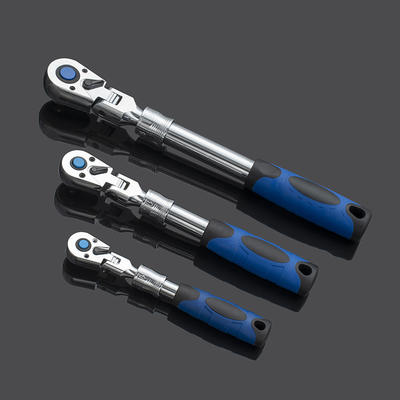
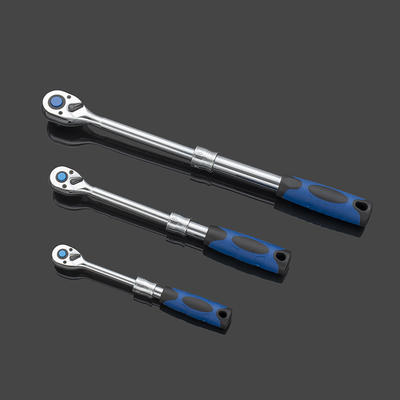
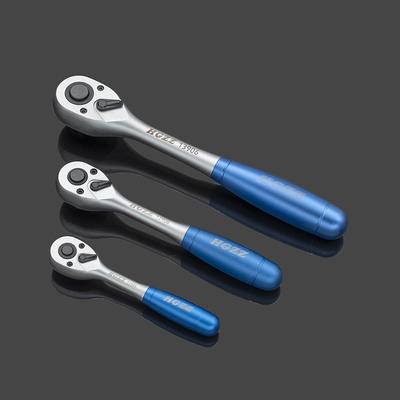

Committed to the production of torque wrenches, ratchet wrenches, sleeve tool sets and other auto and hand tools products.
 Add: Yiqiao Town, Xiaoshan District, Hangzhou City, Zhejiang Province, China. 311256
 Tel: +86-18072832111
 E-mail: [email protected]
Copyright ©2023 Hangzhou Hao Gong Tools Co., Ltd. All Rights Reserved
Mini Ratchet & Digital Torque Wrench Set Suppliers
