


 English
 中文简体
中文简体 русский
 Español
 Deutsch
Flexible head extra long ratchet handle
Gear head material 42CrMo is a kind of steel type, belongs to ultra-high strength steel, high streng...
A mechanical torque screwdriver is a hand tool engineered to apply a precise, pre-set amount of rotational force — known as torque — to fasteners such as screws and bolts. Unlike a standard screwdriver, it incorporates an internal limiting mechanism that disengages or signals the user once the target torque value has been reached, preventing over-tightening.
The most common mechanism found in mechanical torque screwdrivers is the click-type design. When the fastener reaches the set torque, an internal cam or clutch releases, producing an audible "click" and a slight physical jolt in the handle. This tactile and audible feedback confirms that the correct force has been applied — no display, no battery required.
Mechanical torque screwdrivers are widely used across industries including automotive assembly, electronics manufacturing, medical device production, and aerospace maintenance, where consistent fastener torque is critical to product safety and performance.
A digital torque screwdriver replaces the mechanical limiting mechanism with an electronic sensing system. An internal strain gauge or load cell measures the applied torque in real time and displays the value on a digital screen — typically an LCD or LED readout. Some models also emit a beep or light signal when the target torque is reached.
Digital models often offer additional features such as:
Because the torque reading is continuously visible, digital screwdrivers are particularly valued in quality-control environments and laboratory settings where traceability and documentation are mandatory.
While both tool types share the same fundamental goal — applying a controlled torque to a fastener — they differ significantly in how they achieve it, how they communicate feedback to the user, and what environments they suit best. The table below summarizes the key distinctions:
| Feature | Mechanical (Click-Type) | Digital |
|---|---|---|
| Feedback Method | Audible click + physical jolt | Digital display + audible beep / LED |
| Power Source | None required | Battery (AA, AAA, or rechargeable) |
| Typical Accuracy | ±4% to ±6% | ±1% to ±2% |
| Torque Range | 0.05 N·m to 25 N·m (typical) | 0.01 N·m to 50 N·m (typical) |
| Data Output | None | USB, Bluetooth, RS-232 (model-dependent) |
| Ease of Use | Simple; set and go | More setup required; screen reading needed |
| Durability | High; no electronics to damage | Moderate; sensitive to moisture and impact |
| Calibration Interval | Typically every 5,000 cycles or 12 months | Typically every 12 months or per standard |
| Cost | Lower upfront cost | Higher upfront cost |
| Best For | Production lines, field use, workshops | Labs, QA inspection, data-driven assembly |
Understanding the internal operation of a mechanical torque screwdriver helps clarify both its strengths and its limitations.
The most prevalent mechanical design uses a cam-over clutch. Inside the handle, a calibrated spring presses a cam against a detent. As torque builds on the fastener, the resistance force increases. When the applied torque matches the spring's pre-load setting, the cam rides over the detent — producing the characteristic click — and the drive momentarily disengages. This prevents additional torque from being transferred to the fastener.
The spring tension is adjustable via a rotating collar or scale on the handle barrel, allowing the user to dial in a specific torque value within the tool's rated range. Once set, the mechanism is consistent and repeatable as long as the spring and cam remain in good condition.
A less common mechanical variant uses a flexible beam connected to a needle on a graduated dial. As torque is applied, the beam deflects and the needle moves across the scale. There is no click or automatic stop — the operator must watch the dial and stop applying force at the correct reading. This design is extremely durable and does not require calibration of a spring mechanism, but it demands more operator attention.
A specialized subset of mechanical torque screwdrivers is the preset or fixed-torque model. These tools are factory-set to a single torque value — for example, exactly 0.5 N·m — and cannot be adjusted by the user. They are popular in assembly lines where every fastener in a process requires the same torque, eliminating the risk of an operator selecting an incorrect setting. Preset designs are simple, compact, and cost-effective for high-volume, single-torque applications.
One area where digital torque screwdrivers clearly outperform mechanical models is measurement accuracy. A well-maintained click-type mechanical screwdriver typically achieves accuracy within ±4% to ±6% of the set value. While acceptable for many assembly applications, this tolerance may be too wide for precision electronics, medical devices, or aerospace fasteners where specification windows can be as tight as ±2%.
Digital torque screwdrivers, by contrast, commonly achieve accuracies of ±1% to ±2% because the electronic sensor eliminates the mechanical variables — spring fatigue, cam wear, and operator feel — that affect click-type accuracy over time.
However, accuracy advantage must be weighed against the practical context:
Always match the tool's accuracy specification to the fastener's torque tolerance band specified in the engineering drawing or assembly standard.
Mechanical torque screwdrivers are inherently robust because they contain no electronic components. They can tolerate moderate drops, workshop dust, and temperature variations far better than digital tools. Most models are fully sealed against contaminants and can operate in temperatures ranging from -20°C to +60°C without performance degradation.
The primary maintenance requirement is periodic calibration — typically every 5,000 cycles of use or every 12 months, whichever comes first, as recommended by ISO 6789-1:2017. Spring fatigue is the main cause of drift, causing the click to occur at a torque value slightly lower than the indicated setting over time.
Digital models are more sensitive to environmental hazards. Moisture ingress can damage the electronic PCB, and hard impacts may shock the strain gauge or dislodge internal wiring. Battery life is another ongoing operational concern — a dead battery mid-shift means the tool is unusable until power is restored.
Calibration requirements are similar to mechanical tools — annually or per relevant standards — but the process is often more involved, requiring connection to calibration software or return to a certified laboratory.
For harsh production environments such as automotive shops, construction sites, or general manufacturing floors, mechanical torque screwdrivers typically offer a longer service life with lower total maintenance cost. For controlled indoor laboratory or quality-lab environments, digital tools are well-suited because environmental extremes are minimal and the data output justifies the added care they require.
Both tool types overlap significantly in torque range, but digital models often extend toward lower minimum values and higher maximum values because electronic sensing is not limited by the physical spring-size constraints of a mechanical design.
| Application | Recommended Tool Type | Reason |
|---|---|---|
| Automotive production line | Mechanical (preset) | Speed, simplicity, no battery dependency |
| Electronics PCB assembly | Mechanical (low-range click) | Adequate accuracy, fast, cost-effective |
| Medical device manufacturing | Digital | Traceability, tight tolerance, data logging |
| Aerospace MRO | Digital | Audit trail, strict regulatory requirements |
| Bicycle / sports equipment assembly | Mechanical (adjustable click) | Portability, no power needed, reliable |
| Quality control inspection | Digital | Real-time display, peak-hold, reporting |
From a user experience standpoint, both tools have ergonomic differences worth noting in the selection process.
Mechanical click-type screwdrivers are generally lighter and more compact than digital equivalents because they carry no electronics or batteries. The handle grip is typically cylindrical or pistol-shaped, and the torque setting is read directly from a scale engraved on the barrel. Operation is straightforward: set the scale, engage the fastener, and stop at the click. There is no screen to read, no mode to select, and no battery to check — which reduces operator error and cognitive load significantly in high-volume assembly.
Digital models are heavier due to the integrated electronics, display module, and battery compartment. The added weight can cause operator fatigue during prolonged assembly sessions. However, the real-time display eliminates guesswork — the operator can observe torque building incrementally toward the target, which is invaluable for auditing or verifying the torque on existing fasteners (something a click-type cannot do without a torque audit tool).
Modern digital designs increasingly feature backlit displays and one-hand setting adjustments to reduce some of the usability gap with mechanical tools.
Price is often a deciding factor, especially when equipping an entire production line with multiple tools.
However, comparing only purchase price misses important cost factors:
For applications that genuinely require digital features such as data logging and traceability, the higher cost is justified. For standard production assembly where a click is sufficient feedback, the mechanical option delivers strong value over the tool's lifetime.
Both mechanical and digital torque screwdrivers should be calibrated in accordance with recognized standards to ensure measurement validity. The primary international standard governing torque screwdriver calibration is ISO 6789-1:2017 (for click-type and other indicating and setting tools) and ISO 6789-2:2017 (for requirements and results for quality assurance). Many industries also reference ASME B107.300 and DIN EN ISO 6789.
Key calibration considerations include:
Regardless of tool type, never use a torque screwdriver as a hammer, pry bar, or general screwdriver — shock loading can immediately throw the tool out of calibration.
The best torque screwdriver is the one that matches your specific operational requirements. Use the following decision points to guide your selection:
In many operations, both tool types coexist: mechanical screwdrivers on the production line for speed and simplicity, and digital tools in the quality control lab for final inspection and documentation. This hybrid approach captures the strengths of each design where they matter most.
Most standard click-type mechanical torque screwdrivers are designed for clockwise (tightening) use only. Some models include a reversible mechanism for counterclockwise torque application, but this is less common. Always check the product specification before using in reverse direction.
The standard recommendation under ISO 6789 is every 5,000 operating cycles or every 12 months, whichever comes first. In high-frequency production environments, calibration intervals may be shortened based on internal quality procedures.
Generally yes. Digital models typically achieve ±1% to ±2% accuracy compared to ±4% to ±6% for most mechanical click-type tools. However, mechanical tools are accurate enough for the vast majority of industrial assembly applications.
No. Mechanical torque screwdrivers should always be stored at or near their minimum torque setting to relieve spring tension. Storing at maximum setting causes premature spring fatigue and can cause the tool to drift out of calibration more rapidly.
Yes. Digital torque screwdrivers must also be calibrated against a traceable torque standard, typically annually. The calibration process involves comparing the digital readout to a certified reference torque analyzer across multiple measurement points within the tool's range.
The most common unit is Newton-meters (N·m). Many tools also display cN·m (centi-Newton-meters) for low-torque applications or in·lbf for markets using imperial units. Digital models often support multiple selectable units on the same tool.
No. Preset torque screwdrivers are factory-set and sealed at a fixed torque value. They are designed specifically to prevent inadvertent adjustment on the production floor, ensuring consistent torque application without operator error.
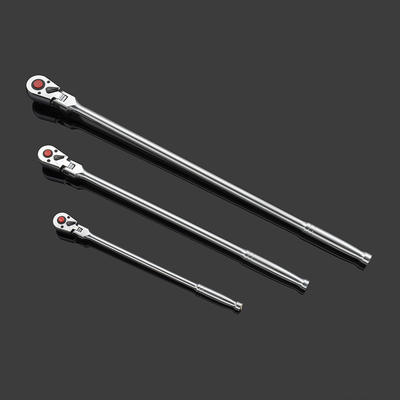
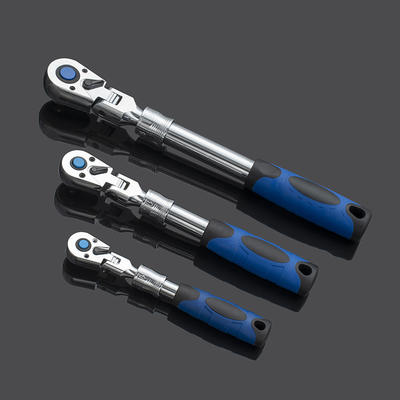
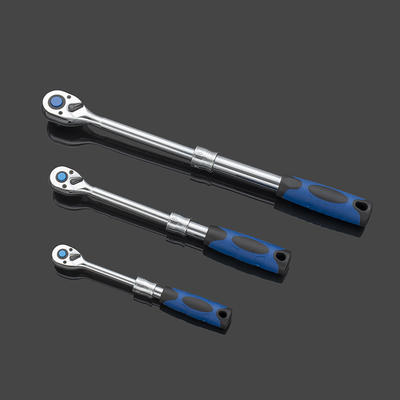
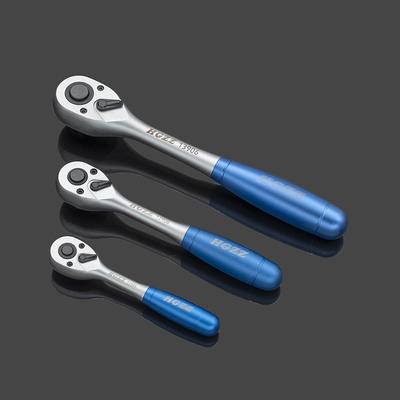
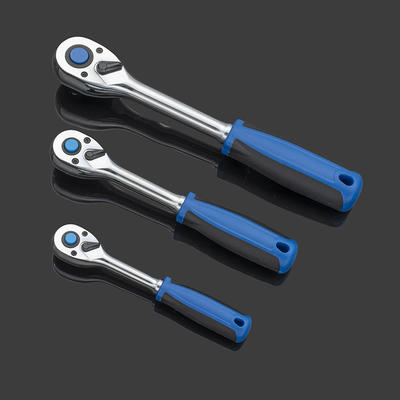
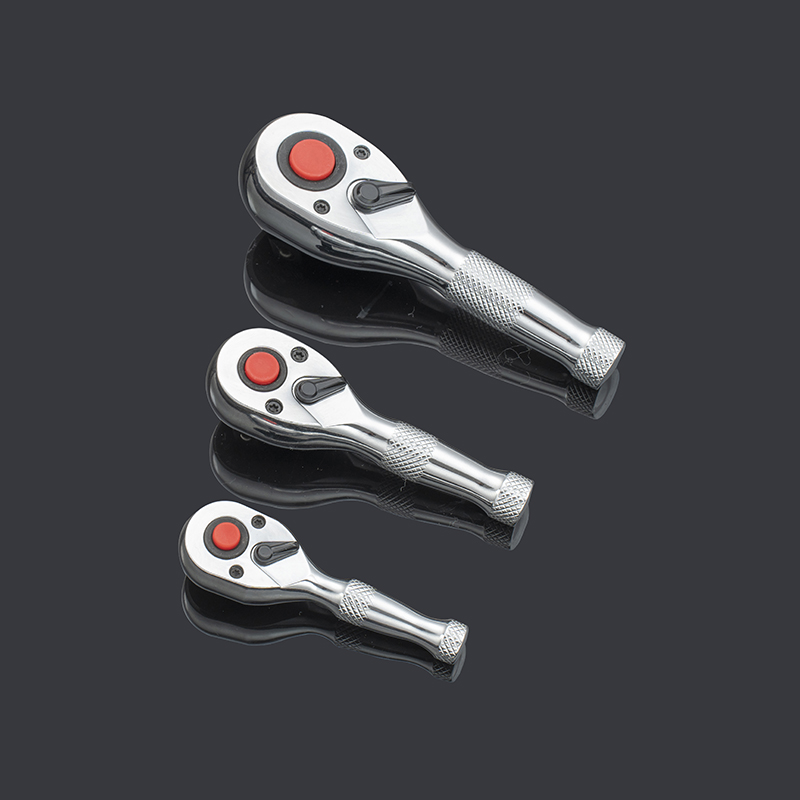
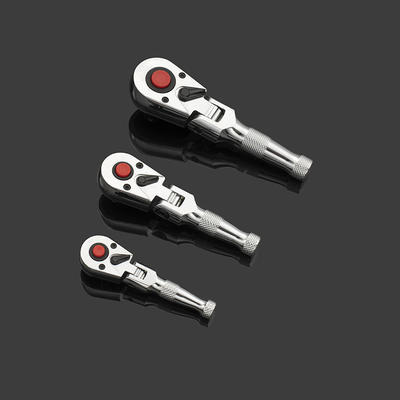
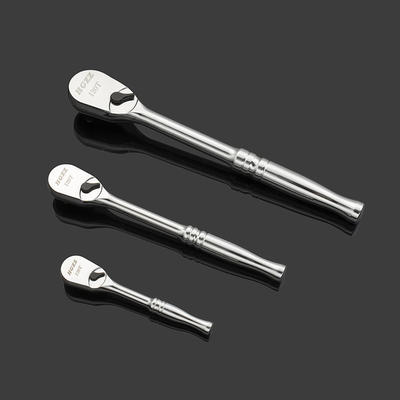
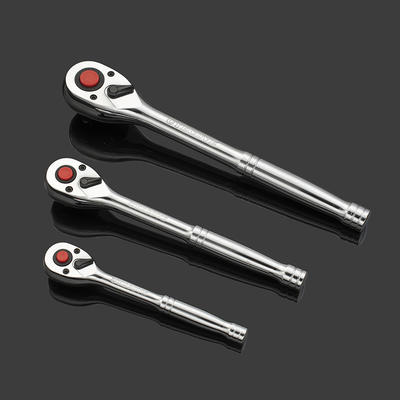
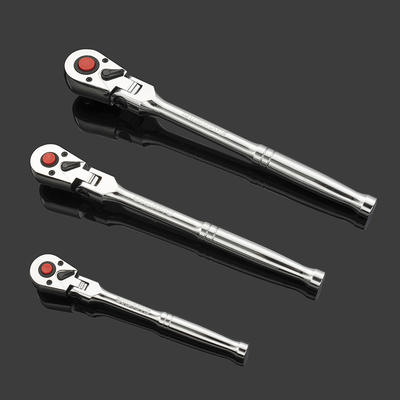
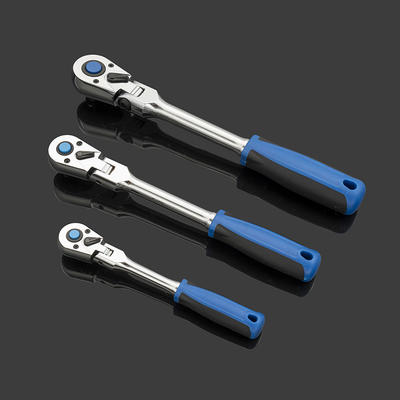
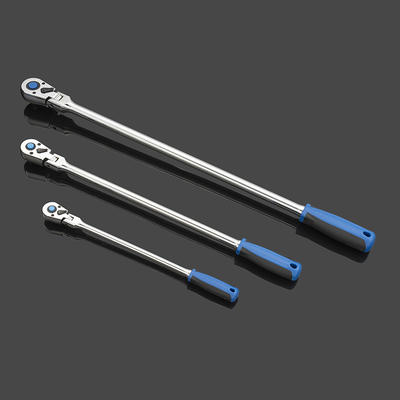

Committed to the production of torque wrenches, ratchet wrenches, sleeve tool sets and other auto and hand tools products.
 Add: Yiqiao Town, Xiaoshan District, Hangzhou City, Zhejiang Province, China. 311256
 Tel: +86-18072832111
 E-mail: [email protected]
Copyright ©2023 Hangzhou Hao Gong Tools Co., Ltd. All Rights Reserved
Mini Ratchet & Digital Torque Wrench Set Suppliers
