


 English
 中文简体
中文简体 русский
 Español
 Deutsch
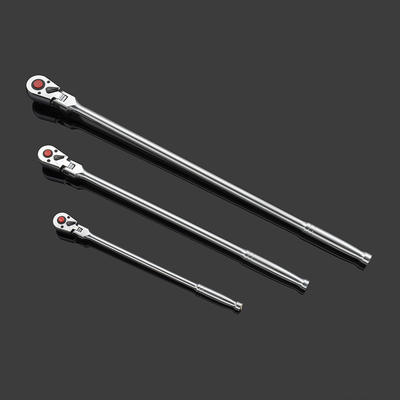
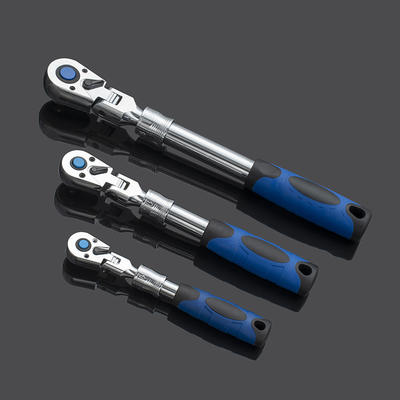
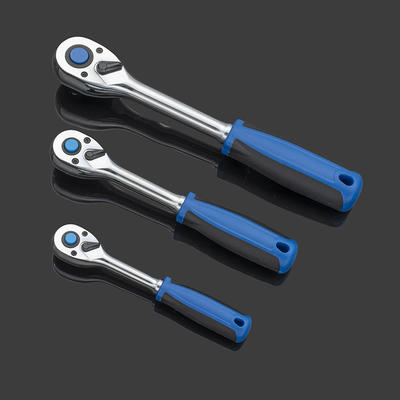
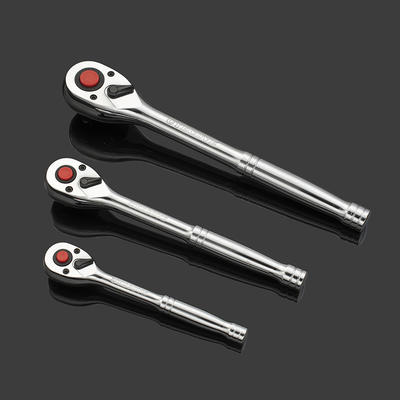
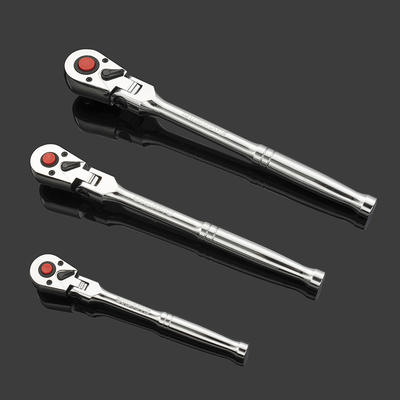
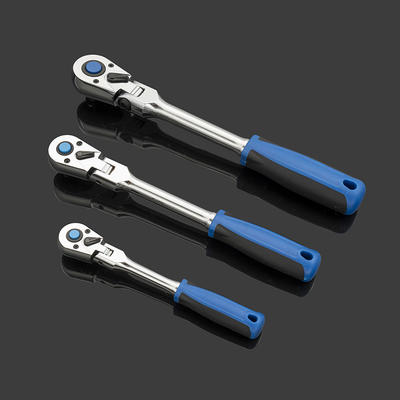
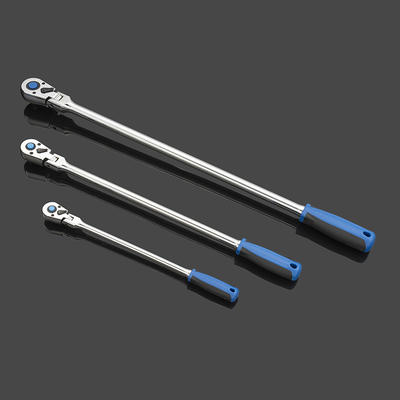
Flexible head extra long ratchet handle
Gear head material 42CrMo is a kind of steel type, belongs to ultra-high strength steel, high streng...
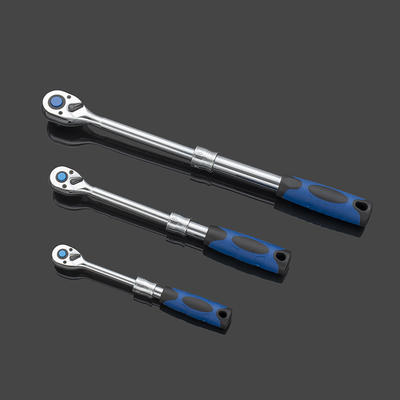
When standard ratchet handles fall short, an extended ratchet wrench steps in to fill the gap. The core advantage is straightforward: a longer handle means more reach into tight or deep spaces, and more torque output per unit of effort. In practical terms, a wrench with a handle length of 450mm or more can deliver significantly greater turning force than a standard 250mm handle — without requiring extra physical strength from the operator.
This is not just a convenience feature. In professional environments such as automotive repair bays, industrial assembly lines, and pipeline maintenance, the ability to reach recessed fasteners without awkward extensions or multiple adapters can reduce job time by 30% or more. For technicians who work on the same types of fasteners repeatedly, that adds up quickly over a full shift.
Beyond reach, the extended handle also reduces the risk of slipping on deep fasteners, because the operator can maintain a more stable grip angle. This article covers the most practical and valuable use cases for extra-long ratchet wrenches, organized by application type.
The automotive sector is where extended ratchet wrenches demonstrate their value most clearly. Modern vehicle engine bays are increasingly compact, with components stacked close together to meet space and aerodynamic requirements. This creates situations where standard tools simply cannot be positioned effectively.
Cylinder head bolts, timing cover bolts, and rear engine mount fasteners are often recessed 150mm to 250mm below the surface of the engine bay. A standard ratchet may physically reach the fastener but leaves the operator with no room to rotate the handle. An extended wrench positions the handle above or beside obstructions, allowing full swing arc without interference.
Gearbox pan bolts and transmission crossmember fasteners are among the most awkward to access on a lift or jack stands. The combination of being positioned low on the vehicle and surrounded by exhaust components means that a long-reach ratchet is almost mandatory for efficient work. Many technicians report that switching to an extended wrench cuts transmission pan removal time from 45 minutes to under 20 minutes on common vehicle platforms.
Strut tower bolts and tie rod end locknuts are typically recessed inside wheel wells or behind suspension arms. Extra-long ratchet wrenches allow mechanics to reach these fasteners while keeping the arm at a natural angle, reducing fatigue during extended repair sessions.
| Application | Typical Fastener Depth | Recommended Handle Length |
| Cylinder head bolts | 100 - 200mm | 400 - 500mm |
| Transmission pan bolts | 150 - 250mm | 450 - 550mm |
| Suspension strut bolts | 80 - 150mm | 380 - 450mm |
| Engine mount bolts | 200 - 300mm | 500 - 600mm |
Industrial equipment maintenance presents fastener access challenges that are even more demanding than automotive work. Machines are often installed permanently, with service panels facing walls or adjacent equipment. In these environments, extended ratchet wrenches are not optional — they are essential.
Industrial pumps and air compressors have housing bolts and flange connections that may be positioned against structural walls or behind piping. A 500mm to 600mm extended ratchet allows a technician to reach bolts that would otherwise require machine relocation or panel removal — both time-consuming and expensive options.
Conveyor frames, motor mount bolts, and drive shaft fasteners are often located beneath the conveyor bed or inside the frame channel. Standard-length ratchets cannot reach these positions without disassembly. Long-reach ratchets can access these fasteners in-situ, keeping downtime to a minimum during scheduled maintenance windows.
Generator enclosure fasteners and electrical cabinet mounting bolts are frequently positioned in the rear of deep enclosures. With enclosure depths commonly reaching 400mm to 600mm, an extended ratchet wrench is the only practical hand tool for reaching rear fasteners without removing the entire unit.
Construction applications benefit from extended ratchet wrenches in two distinct ways: leverage at overhead positions and reach into structural cavities. Both require a tool that combines length with reliable ratcheting action.
High-strength structural bolts used in steel frame construction typically require substantial torque — often in the range of 200 Nm to 400 Nm for M20 and M24 bolts. While a torque wrench is used for final tightening, an extended ratchet wrench is ideal for running nuts down quickly before torquing. The added handle length reduces the number of swing strokes needed per bolt and lowers operator fatigue during repetitive assembly work.
Formwork systems and scaffolding structures use bolted connections that are often positioned inside tube frameworks or behind plywood panels. Extended ratchet wrenches allow workers to tighten these connections without needing to reach inside the structure by hand — reducing both effort and risk of injury.
When working in trenches or inspection pits, fasteners on pipe flanges and utility brackets are often at awkward angles below standing level. An extended wrench allows the worker to apply torque from a standing or crouching position rather than kneeling or lying on the ground, improving both productivity and physical safety.
Plumbing and HVAC systems are characterized by dense pipe runs and equipment positioned in cramped utility rooms or ceiling cavities. Extended ratchet wrenches are a routine part of the professional plumber's and HVAC technician's toolkit.
Pipe flanges in commercial and industrial plumbing are bolted connections that require multiple fasteners to be tightened evenly. When flanges are positioned against walls or inside pipe chases, a standard ratchet cannot generate enough swing arc to be effective. A long-reach ratchet solves this by allowing the operator to position the handle in clear space while the head engages the recessed fastener.
Air handling units and fan coil units are commonly installed in ceiling spaces with limited clearance — sometimes as little as 300mm to 400mm above the unit. Extended ratchet wrenches allow technicians to tighten mounting brackets and access panel fasteners without needing to awkwardly reposition themselves every few strokes.
Heat exchangers and boiler connections involve flanged joints and threaded rod fasteners that are often buried deep inside equipment enclosures. The reach advantage of an extended ratchet wrench is especially valuable here, where access panels may limit the available working envelope to as little as one arm's width.
Marine environments add an extra layer of difficulty to fastener work: corrosion. Fasteners on boats, docks, and offshore platforms are exposed to saltwater and often require significantly more force to loosen than their torque specifications suggest. This is where the leverage advantage of an extended ratchet wrench becomes critical.
Marine engine rooms are notoriously cramped. Engines are installed with minimal clearance to hull walls, fuel tanks, and cooling systems. Extended ratchet wrenches are among the most-used tools in marine engine servicing because they allow technicians to reach bolts that are physically inaccessible with standard-length tools.
Through-hull fittings and keel bolts on sailing vessels are deep structural fasteners that require substantial torque. An extended wrench provides the mechanical advantage needed to achieve proper clamping force without resorting to improvised cheater bars, which can damage tools and compromise torque accuracy.
On offshore oil and gas platforms, piping connections, valve bonnets, and structural grating fasteners are maintained in conditions that combine corrosion, vibration, and limited workspace. Extended ratchet wrenches rated for industrial use are standard issue on many offshore maintenance teams precisely because of this combination of challenges.
Aerospace and rail industries are subject to strict maintenance schedules and fastener torque specifications. In both fields, access to fasteners in confined assemblies is a routine challenge, and extended ratchet wrenches are part of the approved tooling in many maintenance procedures.
Aircraft panels, access doors, and engine cowlings use hundreds of fasteners in locations ranging from easy to extremely confined. Extended ratchet wrenches — particularly those with flexible or articulating heads — allow maintenance technicians to reach fasteners deep in wing roots, engine nacelles, and fuselage cavities without special tooling.
Rail vehicle bogies and undercarriage assemblies have fasteners located in positions that are difficult to access from inspection pits. Long-reach ratchet wrenches allow maintenance teams to service these components from below without needing to elevate the vehicle on specialized lifting equipment for every routine inspection.
Not all extended ratchet wrenches are equal. When selecting one for professional use, the following features have a direct impact on performance and durability:
Both tool types have their place in a well-equipped toolbox. The decision comes down to the specific task at hand.
| Factor | Standard Ratchet | Extended Ratchet Wrench |
| Handle Length | 200 - 280mm | 380 - 600mm+ |
| Torque Advantage | Moderate | High |
| Deep Access | Limited | Excellent |
| Tight Space Maneuverability | Good | Moderate (flex-head improves this) |
| Weight | Light | Heavier |
| Operator Fatigue (High Torque) | Higher | Lower |
| Best For | General service, light tasks | Deep access, high-torque, confined spaces |
As a general rule: if the fastener is within easy reach and torque requirements are low to moderate, a standard ratchet is the more ergonomic choice due to its lighter weight. If the fastener is recessed, surrounded by obstructions, or requires significant torque, an extended ratchet wrench is the right tool.
The additional leverage of an extended wrench also means a greater potential for over-torquing or tool slip. Following best practice guidelines protects both the operator and the fastener.
The primary advantage is reach — extended handles allow access to fasteners located in deep, recessed, or obstructed positions that standard wrenches cannot effectively engage. The longer handle also increases mechanical advantage, reducing the force required from the operator for high-torque applications.
Generally, any handle length over 350mm (approximately 14 inches) is considered extended. Professional-grade extended ratchet wrenches commonly range from 400mm to 600mm, with some specialized versions exceeding 700mm for deep industrial applications.
Extended ratchet wrenches are not substitutes for calibrated torque wrenches when precise torque values are required. They are best used for running fasteners down efficiently before final torquing with a dedicated torque wrench.
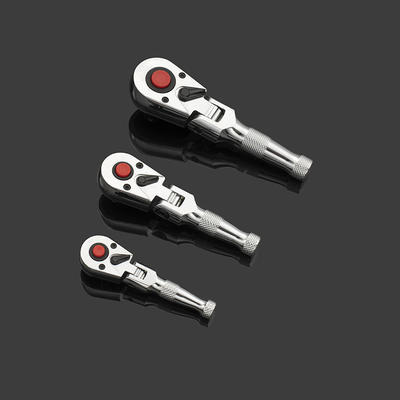
Flex-head models offer more versatility in confined spaces by allowing the head to pivot at different angles. However, they add complexity and potential wear points. Fixed-head models are simpler, more durable, and sufficient for most deep-reach applications.
A 3/8-inch drive covers most automotive and light industrial tasks. A 1/2-inch drive is recommended for heavy-duty applications involving large fasteners or high torque requirements, such as suspension components, structural bolts, and industrial equipment maintenance.
Clean the ratchet head regularly to remove metal particles and debris. Apply a light machine oil to the ratchet mechanism periodically. Store the wrench in a protected location to prevent handle bending. Inspect for cracks or wear before each use, especially around the head and the handle-to-head joint.
Yes, provided the wrench has a corrosion-resistant finish such as chrome or nickel plating. After use in saltwater environments, rinse the tool with fresh water and dry it thoroughly before storage to extend its service life.
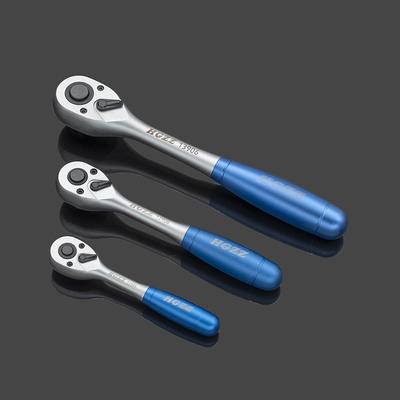

Committed to the production of torque wrenches, ratchet wrenches, sleeve tool sets and other auto and hand tools products.
 Add: Yiqiao Town, Xiaoshan District, Hangzhou City, Zhejiang Province, China. 311256
 Tel: +86-18072832111
 E-mail: [email protected]
Copyright ©2023 Hangzhou Hao Gong Tools Co., Ltd. All Rights Reserved
Mini Ratchet & Digital Torque Wrench Set Suppliers
