


 English
 中文简体
中文简体 русский
 Español
 Deutsch
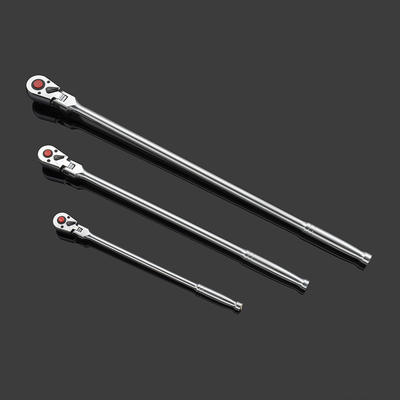
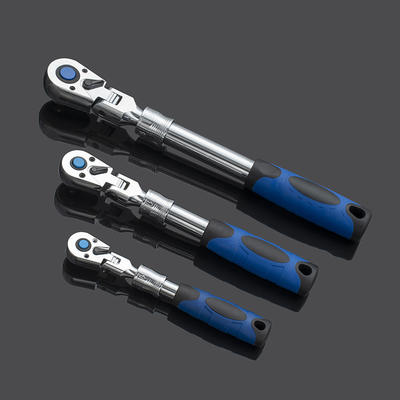
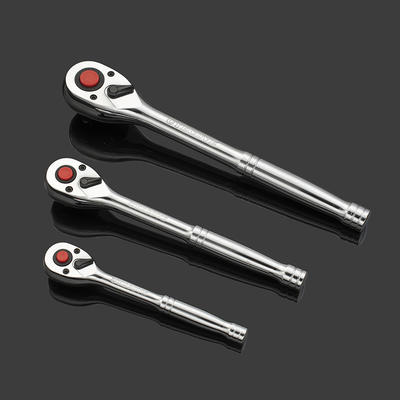
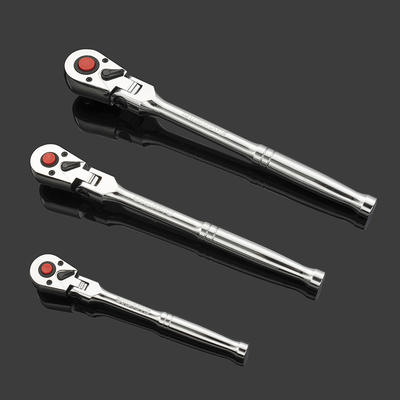
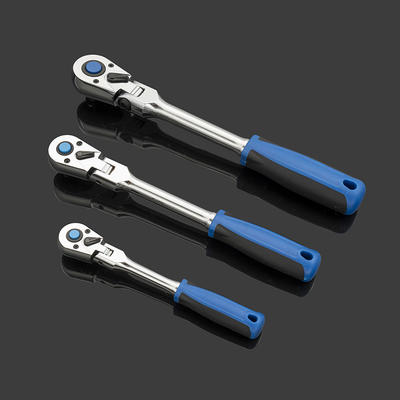
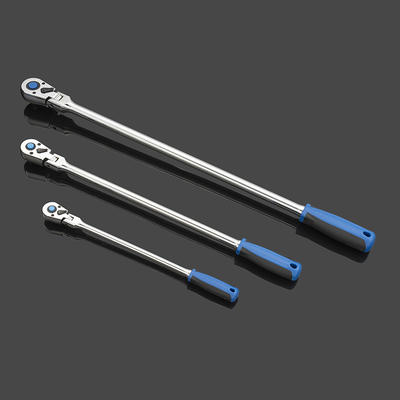
Flexible head extra long ratchet handle
Gear head material 42CrMo is a kind of steel type, belongs to ultra-high strength steel, high streng...
A click-type mechanical torque wrench is one of the most widely used precision fastening tools in automotive repair, industrial assembly, and construction. Its defining feature is a distinctive audible and tactile "click" that signals when the preset torque value has been reached — giving the user an immediate, reliable confirmation without needing to watch a gauge or screen. But like any tool, it comes with both strengths and limitations. Understanding them in detail helps you decide when this wrench is the right choice and when another type may serve you better.
Before weighing the pros and cons, it helps to understand the basic mechanism. Inside the handle of a click-type wrench is a spring-loaded ball-and-socket or lever mechanism. When you rotate the handle to set a torque value — typically marked on a graduated scale — you are pre-compressing the internal spring to a specific load threshold.
As you apply force to the fastener, the wrench transmits torque normally. The moment the applied torque matches the preset value, the internal mechanism releases briefly, producing a clear "click" sound and a slight physical jolt. This is the signal to stop tightening. Once the click occurs, continuing to apply force will simply cause repeated clicking — but it will also over-torque the fastener if you keep going.
This mechanism is entirely mechanical — no batteries, no digital displays, no external power. That simplicity is central to both the advantages and disadvantages discussed below.
The audible click is one of the most reliable feedback mechanisms available in manual torque tools. Unlike beam-type wrenches that require you to read a needle while applying force — which can introduce parallax error — the click gives you an unmistakable sensory cue. In noisy environments, the physical "break" sensation in your hand reinforces the signal even if you cannot hear it.
Since the entire mechanism is mechanical, click-type torque wrenches require no external power. They are always ready to use, unaffected by dead batteries or charging cycles. This makes them especially dependable for fieldwork, outdoor maintenance, and emergency repairs.
Click-type wrenches are manufactured across an exceptionally broad torque range. Common options include:
This versatility means a single tool type can serve vastly different applications simply by choosing the correct capacity range.
A well-maintained click-type torque wrench typically offers accuracy within plus or minus 4% of the set value in the clockwise direction, which meets or exceeds the requirements of most automotive and industrial specifications. High-precision models can achieve plus or minus 3%. This is sufficient for the vast majority of fastening tasks, including critical applications like cylinder head bolts and wheel lug nuts.
With no electronic components to fail, click-type wrenches are mechanically robust. Their lifespan is largely determined by:
Many professional-grade models are designed to last tens of thousands of cycles before requiring recalibration or service.
Operating a click-type wrench requires minimal training. The user sets the torque by adjusting the handle, applies force until the click occurs, and stops. There is no learning curve associated with reading digital outputs or interpreting gauge deflections. This simplicity reduces the risk of user error in training environments.
For most professional and semi-professional uses, click-type mechanical torque wrenches offer strong value. Professional-quality models in the most popular torque ranges are considerably less expensive than equivalent digital torque wrenches, while providing comparable accuracy for standard tasks.
This is the most frequently cited user error with click-type wrenches. Because the wrench continues to transmit torque after clicking — it does not physically disengage — an inexperienced or inattentive user may apply additional force after the signal. Even a fraction of a second of continued tightening can significantly exceed the target torque, potentially stripping threads, cracking components, or compromising joint integrity.
The internal spring mechanism is subject to fatigue over time, which means the preset torque values can drift. Industry standards recommend calibration every 5,000 cycles or every 12 months, whichever comes first. Without periodic calibration, a wrench that appears to be set correctly may be delivering torque values that are off by 10% or more — a critical margin in precision applications.
To prevent spring fatigue and maintain calibration, most manufacturers recommend storing click-type wrenches at their lowest torque setting — not at zero, but at the minimum of the usable range. Leaving the spring under high compression for extended periods accelerates wear and reduces accuracy. This storage habit is easy to forget and is a common cause of premature calibration drift.
Click-type wrenches require a full arc of motion to operate reliably. In tight or confined spaces — such as within engine bays with limited clearance — completing a proper torque stroke can be difficult or impossible. In these situations, a dial-type or electronic torque wrench with a smaller head profile may be more practical.
Most click-type torque wrenches are calibrated and accurate only for clockwise (tightening) torque. While many models mechanically allow counterclockwise operation, the accuracy in that direction is not guaranteed. For applications requiring precise counterclockwise torque — such as certain left-hand threaded fasteners — a specifically rated reversible model or a different wrench type is required.
Unlike dial or digital torque wrenches, which display the applied torque in real time, a click-type wrench provides feedback only at the set threshold. If you need to monitor torque throughout a range — for example, to detect a sudden drop in torque that might indicate a cross-threaded fastener — click-type wrenches do not provide this visibility.
At very low torque values (typically below 5 Nm), the click mechanism becomes less reliable. The spring tension required to produce a perceptible click at low values can interfere with precision. For delicate electronic assemblies or small fasteners requiring 1 to 3 Nm, a dedicated micro torque wrench or a beam-type wrench is generally more appropriate.
| Aspect | Pros | Cons |
|---|---|---|
| Feedback Method | Clear audible and tactile click | No continuous torque monitoring |
| Power Source | None required | N/A |
| Accuracy | 3 to 4% (clockwise) | Degrades without calibration; counterclockwise unreliable |
| Range | Available from 5 Nm to 600 Nm and above | Less reliable at very low torque values |
| Durability | No electronics to fail; very long service life | Spring fatigue requires periodic recalibration |
| Ease of Use | Simple and intuitive operation | Risk of over-torque if user continues after click |
| Cost | Lower cost than digital alternatives | Calibration service adds periodic cost |
| Space Requirements | Standard reach for open areas | Requires sufficient arc of motion |
| Storage | No special requirements beyond spring release | Must be stored at minimum torque setting |
Given the advantages and limitations outlined above, click-type wrenches are best suited to the following scenarios:
There are specific scenarios where a different torque wrench type may be more appropriate:
Most quality click-type wrenches are accurate to plus or minus 4% of the set value in the clockwise direction, with premium models achieving plus or minus 3%. This meets most automotive and industrial fastening standards.
The general recommendation is every 5,000 cycles or once per year, whichever comes first. Heavy-use environments may require more frequent checks.
Mechanically, many models allow counterclockwise operation, but accuracy in that direction is not guaranteed. Use a standard wrench or a specifically rated reversible torque model for loosening tasks that require precise torque measurement.
The wrench will keep clicking, but torque will continue to transfer to the fastener. This results in over-torquing, which can strip threads, deform fasteners, or crack mating components. Always stop at the first click.
No. Store it at the lowest torque setting on the scale, not at zero. Completely removing spring tension can also be harmful. The minimum scale value is the correct storage position.
Not reliably for torques below 5 Nm. For small or delicate fasteners, a beam-type or dedicated micro torque wrench provides more precise control at low values.
A 20 to 150 Nm range covers the majority of automotive applications, including wheel lug nuts (typically 80 to 130 Nm) and most engine and chassis fasteners. For exhaust or delicate sensor work, a smaller range wrench may also be useful.
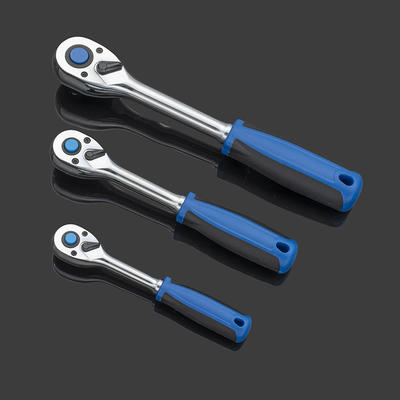
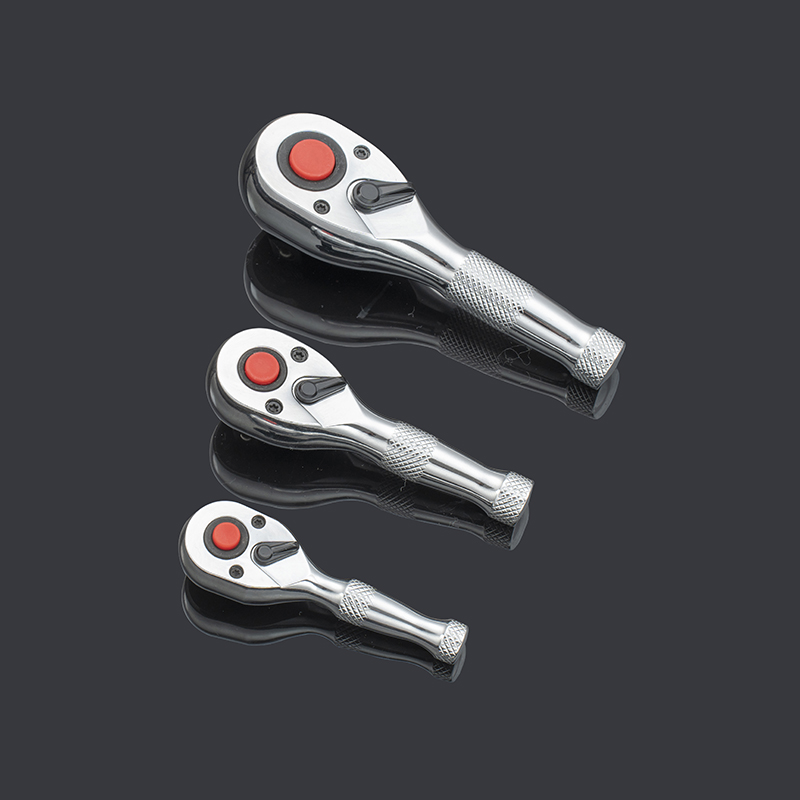
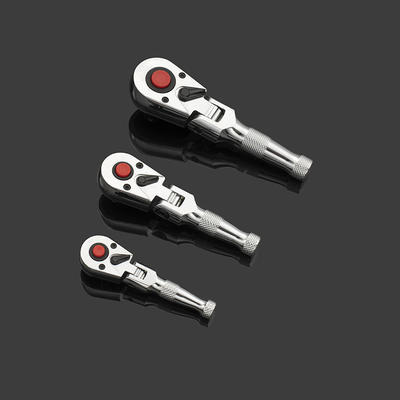
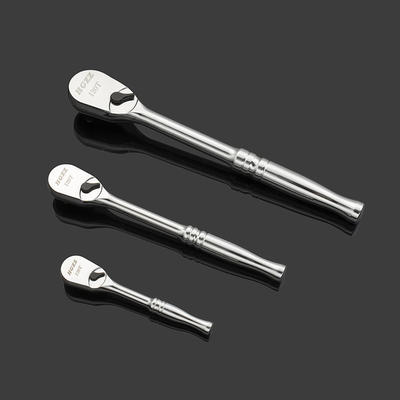

Committed to the production of torque wrenches, ratchet wrenches, sleeve tool sets and other auto and hand tools products.
 Add: Yiqiao Town, Xiaoshan District, Hangzhou City, Zhejiang Province, China. 311256
 Tel: +86-18072832111
 E-mail: [email protected]
Copyright ©2023 Hangzhou Hao Gong Tools Co., Ltd. All Rights Reserved
Mini Ratchet & Digital Torque Wrench Set Suppliers
