


 English
 中文简体
中文简体 русский
 Español
 Deutsch
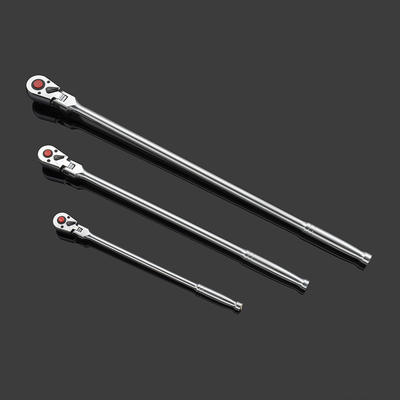
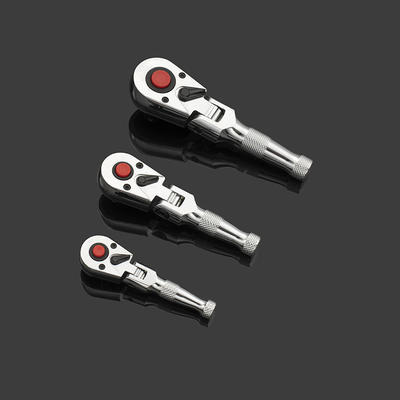
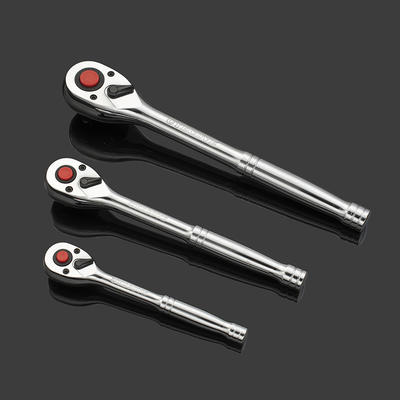
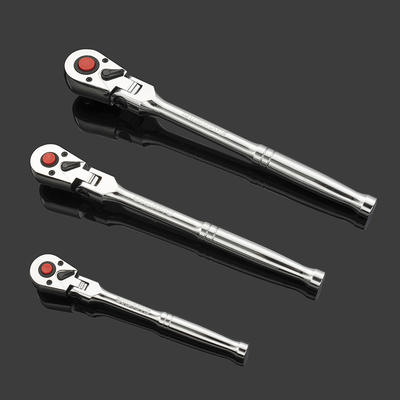
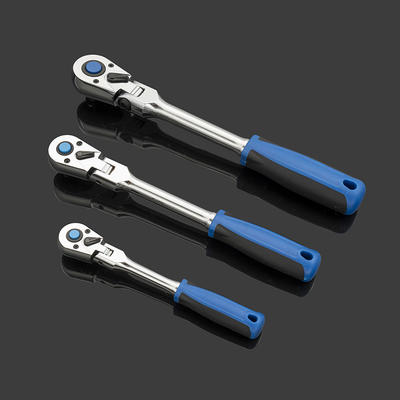
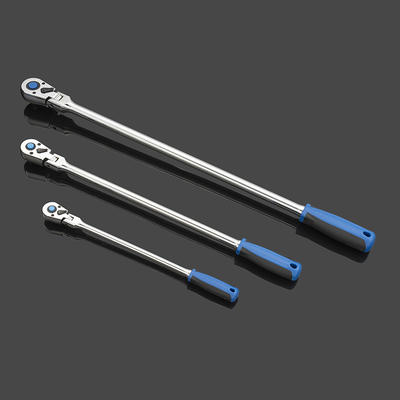
Flexible head extra long ratchet handle
Gear head material 42CrMo is a kind of steel type, belongs to ultra-high strength steel, high streng...
When it comes to precision fastening, choosing the right torque tool can make a significant difference in both work quality and efficiency. The debate between an interchangeable head torque wrench and a fixed-head ratchet is one that professionals across automotive, construction, aerospace, and industrial maintenance fields face regularly. While fixed-head ratchets have their place in the toolbox, interchangeable head torque wrenches offer a range of structural, functional, and economic advantages that simply cannot be matched by a single-head design. This article breaks down those advantages in detail, helping you make a more informed tool selection decision.
An interchangeable head torque wrench is a precision torque tool designed with a modular handle that accepts a variety of swappable head attachments. These heads can include ratcheting heads, open-end heads, flare nut heads, and crow foot heads, among others. The torque-measuring mechanism is built into the handle, which remains constant across all head types. Users simply click or lock a different head onto the same body when the application demands it.
By contrast, a fixed-head ratchet is a single-purpose wrench with a permanently attached ratcheting mechanism of one specific drive size. It can apply torque through a socket set, but the head itself cannot be swapped or replaced without discarding the entire tool.
The most immediate benefit of an interchangeable head torque wrench is versatility. A single torque handle paired with a set of swappable heads can replace five or more individual fixed tools. This is particularly valuable in environments where multiple fastener types are encountered within a single job, such as automotive repair, bicycle assembly, or industrial equipment maintenance.
Consider a mechanic working on a vehicle's brake system. The job may require tightening caliper bolts with a socket (ratchet head), securing brake line fittings (flare nut head), and reaching a recessed bolt behind the suspension (crow foot head). With a fixed-head ratchet, three separate torque wrenches — each calibrated separately — would be necessary. With an interchangeable system, one calibrated handle performs all three tasks, reducing setup time and tool clutter.
| Feature | Interchangeable Head Torque Wrench | Fixed-Head Ratchet |
| Head types supported | Multiple (ratchet, open-end, flare nut, etc.) | One fixed type |
| Drive sizes covered | Multiple (1/4", 3/8", 1/2" and more) | Single drive size |
| Torque precision | Consistent across all heads | Only for fixed drive size |
| Cost per application | Low (shared handle) | High (new tool per application) |
| Storage space required | Compact (one handle + heads) | Larger (multiple separate tools) |
One of the most critical differences between these two tool types lies in torque accuracy and calibration reliability. A torque wrench is a measurement instrument — its primary role is to apply a specific, repeatable torque value to a fastener, preventing both under-tightening (which leads to loosening) and over-tightening (which causes stripping, warping, or component failure).
With a fixed-head ratchet, applying a known torque requires either relying on feel (highly unreliable) or pairing the ratchet with a separate torque adapter — an indirect and less accurate method. Torque adapters introduce variability because the reading depends on the angle of application and the mechanical properties of the adapter itself.
An interchangeable head torque wrench, however, delivers the torque measurement directly at the handle, regardless of which head is attached. The calibrated mechanism is in the handle body, ensuring that every head benefits from the same precision. Professional-grade interchangeable head torque wrenches commonly achieve an accuracy of plus or minus 3% to 4% of the displayed value across the full working range — a standard suitable for automotive OEM specifications, aerospace assembly, and ISO-regulated maintenance work.
From a total cost-of-ownership perspective, an interchangeable head torque wrench set offers substantially greater value than assembling a collection of fixed-head ratchets. The economics become clear when you factor in the number of different fastening scenarios encountered in professional work.
A professional automotive technician might need torque tools for at least three drive sizes (1/4", 3/8", 1/2") plus specialized heads for brake lines and tight-access bolts. Purchasing five separate fixed-head torque ratchets — each requiring its own calibration certificate — represents a significant investment. An interchangeable head system achieves the same coverage with:
Additionally, when a head wears out or is damaged, only that individual head needs replacement — not the entire torque wrench. This modularity can reduce replacement costs by 60% to 80% compared to replacing a complete fixed-head tool.
Calibration is a recurring expense for any precision torque tool used in certified environments (automotive dealerships, aerospace MRO, ISO-certified plants). With fixed-head tools, each wrench must be individually calibrated. With an interchangeable system, only the single handle requires periodic calibration, consolidating this expense significantly and simplifying quality control recordkeeping.
Carrying multiple fixed-head tools adds weight to a technician's toolbelt or kit. In high-volume production environments or field service settings where mobility matters, reducing tool weight and bulk directly impacts worker comfort and efficiency.
An interchangeable head torque wrench system typically weighs less overall than the equivalent set of fixed-head ratchets performing the same tasks. The single ergonomic handle is also designed for consistent grip and leverage, meaning the user's hand position and applied force remain natural and consistent regardless of the head in use.
Many fasteners in real-world applications are not located in open, easy-to-reach positions. Engine compartments, undercarriage assemblies, HVAC units, and industrial machinery often present fasteners in deeply recessed, angled, or tightly confined locations where a fixed ratchet head simply cannot be positioned correctly.
Interchangeable head torque wrenches solve this problem through specialized head options. A crow foot head, for instance, allows torque to be applied to a fastener from the side, at an angle or offset position that would be impossible with a standard ratchet. An open-end head can engage fasteners where a socket cannot be lowered over the bolt head due to surrounding components.
This access flexibility is not merely a convenience — in many applications, it is the difference between completing the job correctly and leaving a fastener under- or over-torqued due to tool limitations. Professionals in aerospace, heavy equipment, and marine industries routinely require this kind of adaptability.
In workshops, assembly lines, or field service teams where multiple technicians work with shared tooling, standardization is a key efficiency driver. When an entire team uses interchangeable head torque wrench systems based on the same handle platform, tool management becomes straightforward:
By contrast, maintaining a fleet of fixed-head ratchets in different drive sizes and configurations requires tracking a much larger number of individual tools, each with its own calibration history and replacement schedule. This multiplies administrative overhead without adding functional capability.
The modular design of an interchangeable head torque wrench also provides a meaningful advantage in terms of long-term durability. In a fixed-head ratchet, if the ratchet mechanism wears out or the drive square becomes damaged, the entire tool — including any torque-measuring capability it may have — must be discarded or sent for repair.
In an interchangeable head system, the handle (which houses the precision torque mechanism) and the heads (which bear the mechanical wear of fastening) are separate components. This means:
This separation of function extends the effective service life of the most expensive component — the calibrated torque handle — by significantly reducing its exposure to wear-causing conditions.
The advantages described above are not limited to a single application domain. Interchangeable head torque wrenches are adopted across a wide range of industries where precision, efficiency, and adaptability are simultaneously required:
| Industry | Typical Application | Key Head Type Used |
| Automotive Repair | Engine, suspension, brakes | Ratchet, flare nut, crow foot |
| Aerospace MRO | Airframe, engine assembly | Open-end, crow foot, spanner |
| Industrial Machinery | Conveyor systems, presses | Ratchet, open-end |
| Construction Equipment | Structural joints, lifting gear | Ratchet, crow foot |
| Marine Engineering | Engine rooms, deck hardware | Flare nut, open-end |
| Bicycle and Sports Equipment | Component assembly, carbon parts | Small-drive ratchet, open-end |
In the interest of a balanced assessment, it is worth acknowledging that fixed-head ratchets are not without merit. For simple, single-task applications where only one drive size is needed and torque precision is not a critical requirement — such as basic assembly or light maintenance tasks — a fixed ratchet may be an adequate and lower-cost choice.
However, the moment a job requires:
— the interchangeable head torque wrench becomes the clearly superior choice. The versatility, accuracy, and economic efficiency it delivers make it the professional standard in most demanding work environments.
No. Heads are designed to be compatible with specific handle models or product series. Always verify that the head attachment matches the handle's connection standard before use.
Not when using manufacturer-approved heads. The torque measurement mechanism is in the handle, so accuracy remains consistent across all compatible heads. Using non-approved or poorly fitted heads can introduce error.
Most standards recommend calibration every 12 months or every 5,000 cycles, whichever comes first. Since only the handle requires calibration, the cost and frequency are much lower than maintaining multiple fixed-head tools.
Yes. Many interchangeable head torque wrench systems include low-range handles (starting from as low as 2 to 3 Nm) specifically suited for delicate components such as carbon fiber bicycle parts or electronic connectors.
Ranges vary by model. Common professional handles cover ranges such as 5 to 25 Nm, 20 to 100 Nm, or 40 to 200 Nm. Higher-torque handles for heavy equipment can exceed 500 Nm.
A crow foot head introduces a small offset from the drive center, which can affect actual torque applied at the fastener. Most manufacturers provide an offset correction formula or table — following this ensures the fastener receives the correct torque value.
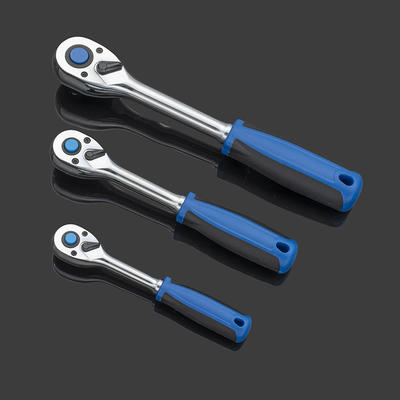
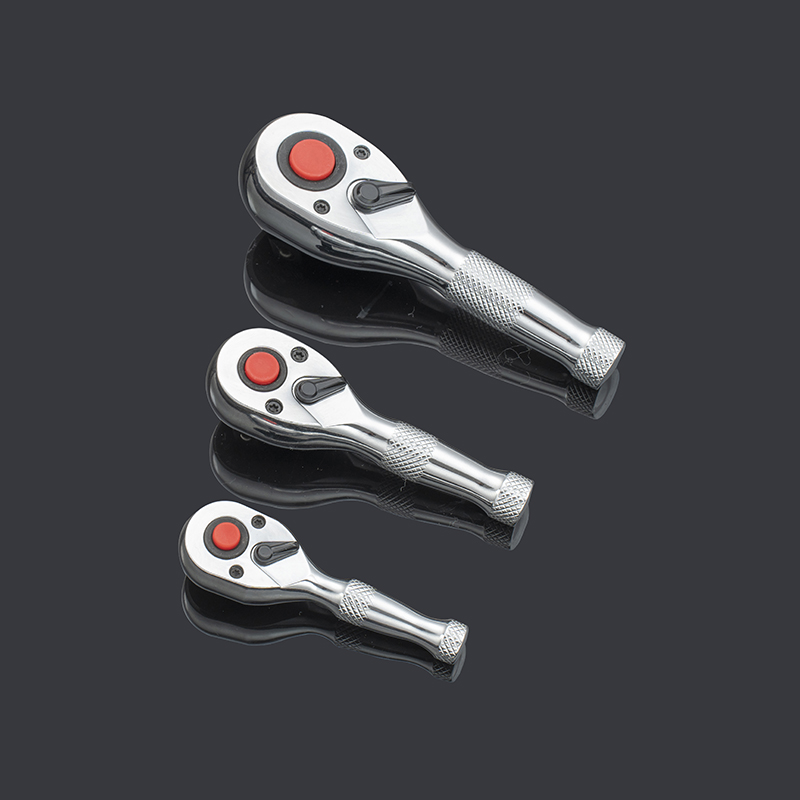
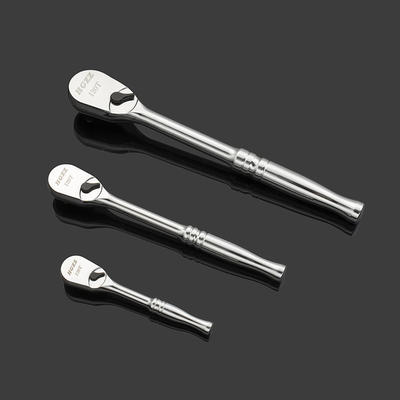

Committed to the production of torque wrenches, ratchet wrenches, sleeve tool sets and other auto and hand tools products.
 Add: Yiqiao Town, Xiaoshan District, Hangzhou City, Zhejiang Province, China. 311256
 Tel: +86-18072832111
 E-mail: [email protected]
Copyright ©2023 Hangzhou Hao Gong Tools Co., Ltd. All Rights Reserved
Mini Ratchet & Digital Torque Wrench Set Suppliers
