


 English
 中文简体
中文简体 русский
 Español
 Deutsch
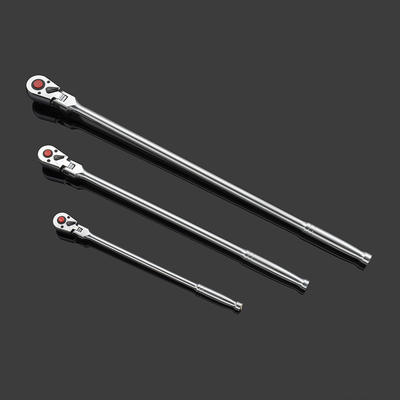
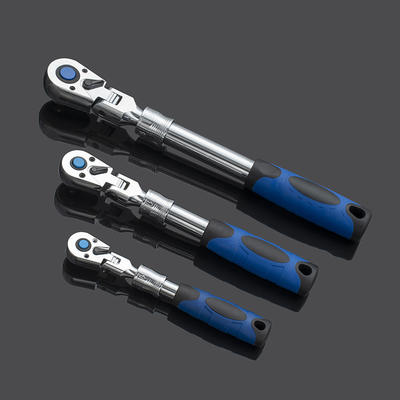
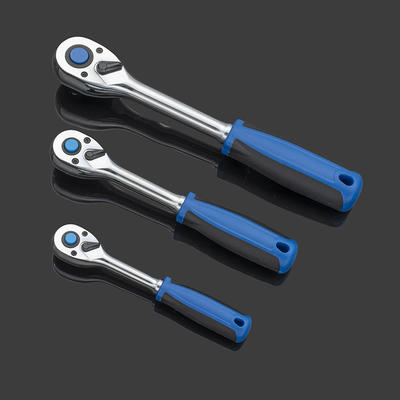
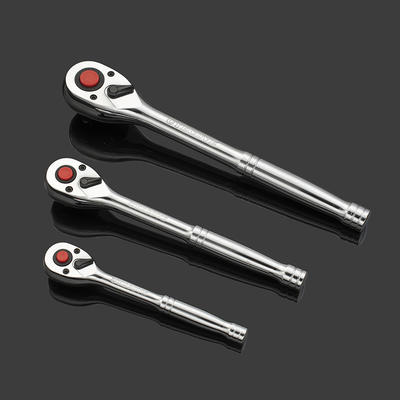
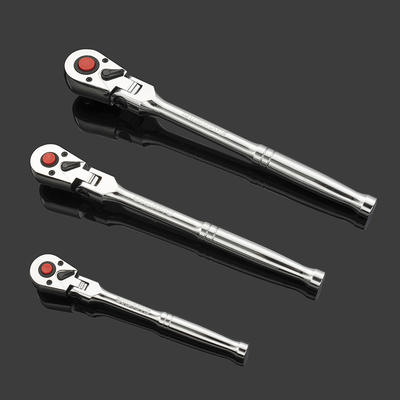
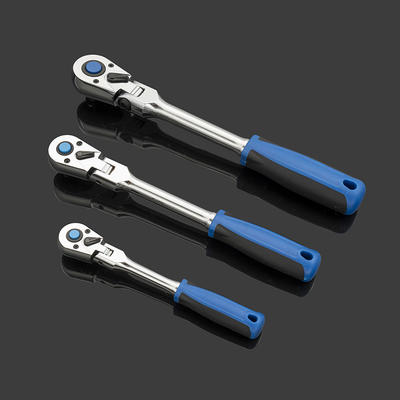
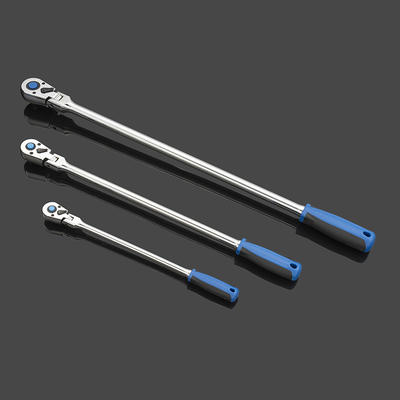
Flexible head extra long ratchet handle
Gear head material 42CrMo is a kind of steel type, belongs to ultra-high strength steel, high streng...
Torque wrenches with interchangeable heads offer unparalleled versatility for professionals who encounter diverse fastening applications. Rather than purchasing multiple dedicated torque tools, a single wrench body can accommodate various head types—ratcheting, open-end, box-end, flare nut, and hook spanners—by simply swapping the attachment. However, this flexibility hinges on one critical factor: selecting the correct interchangeable drive shank size that matches your torque wrench receiver and your specific application requirements. This guide provides a comprehensive technical analysis of interchangeable shank dimensions, including the widely adopted 9x12 mm and 14x18 mm insert standards, the J/Y/X/Z shank classification system, and square drive adapter compatibility considerations.
A interchangeable head torque wrench represents a modular ecosystem. The wrench body contains the torque mechanism—typically a micrometer adjustment system with a spring-loaded release mechanism that produces an audible click at the preset torque value. The interchangeable head attaches to the body via a rectangular female receiver or a round shank interface. Understanding the precise dimensions of these interfaces is essential for safe operation, accurate torque delivery, and tool longevity. Mismatched components can lead to inaccurate torque readings, premature wear, or catastrophic tool failure during use.
Before selecting a drive shank, you must understand the two dominant interface standards in the interchangeable torque wrench market: the DIN rectangle system (9x12 mm and 14x18 mm) and the round shank system (J, Y, X, Z designations). Each standard serves different torque ranges and application contexts.
The 9x12 mm and 14x18 mm female rectangular connectors represent the most widely adopted standard for interchangeable head torque wrenches globally. These dimensions refer to the width and height of the rectangular opening in the wrench body that accepts the insert tool's male rectangular shank[reference:0][reference:1]. The insert tool is secured by a spring-loaded lock pin that engages with a groove on the insert shank.
Industry data indicates that the 9x12 mm interface typically supports torque ranges from approximately 5 N·m to 150 N·m (roughly 4 to 110 ft·lb), while the 14x18 mm interface accommodates higher torque applications from 40 N·m to 400 N·m or more[reference:2]. The physical dimensions of the interface directly correlate with the cross-sectional area available to transmit torsional loads; larger cross-sections distribute stress more effectively, enabling higher torque transmission without plastic deformation of the connection.
An alternative interface standard employs round shanks of increasing diameters, commonly designated as J, Y, X, and Z sizes. Each designation corresponds to a specific diameter:
This round shank system originated from specific manufacturers but has become a de facto interchange standard within the industrial tool ecosystem. When using round shank systems, matching the shank designation precisely is mandatory; a Y shank head will not properly seat in a J shank receiver, and attempting to force it can damage the wrench's locking mechanism.
The interchangeable head itself typically terminates in a square drive that accepts standard sockets. Square drive sizes follow established conventions: 1/4 inch for precision low-torque work, 3/8 inch for general automotive applications, 1/2 inch for heavy-duty automotive and light industrial use, and 3/4 inch for industrial and heavy equipment maintenance[reference:9][reference:10].
Square drive adapters allow you to use socket sets of different drive sizes with your interchangeable torque wrench. However, such adapters extend the lever length of the system and can affect torque accuracy. When a square drive adapter is added, the effective distance from the fastener centerline to the torque sensing mechanism increases, altering the torque applied to the fastener compared to the setting on the wrench. This effect is governed by basic lever mechanics and must be accounted for when using adapters for critical fastening operations.
The decision between a 9x12 mm and a 14x18 mm insert system is one of the most common selection dilemmas for professionals. The table below provides a detailed comparison to guide your choice.
| Parameter | 9x12 mm Insert | 14x18 mm Insert |
|---|---|---|
| Rectangular Receiver Dimensions | 9 mm x 12 mm | 14 mm x 18 mm |
| Typical Torque Range | 5–150 N·m (4–110 ft·lb) | 40–400+ N·m (30–300+ ft·lb) |
| Wrench Body Length Range | 250 mm – 400 mm | 400 mm – 650 mm |
| Primary Applications | Automotive engine assembly, small machinery, precision fastening | Truck repair, industrial machinery, heavy equipment, structural bolting |
| Available Insert Types | Ratcheting, open-end, box-end, flare nut, hex key, screwdriver | Ratcheting, open-end, box-end, square drive adapters |
| Cross-Sectional Area | 108 mm² | 252 mm² (2.33x larger) |
| Spring-Lock Pin Diameter | 4 mm typical | 6 mm typical |
The cross-sectional area difference is particularly significant. The 14x18 mm interface provides approximately 133 percent more material cross-section than the 9x12 mm interface. This additional material allows the 14x18 mm system to handle substantially higher torsional stresses without yielding. For applications involving fasteners larger than M12 (1/2 inch) or requiring torque values above 150 N·m (110 ft·lb), the 14x18 mm system is strongly recommended.
Within the heavy duty torque drive standard context, interchangeable head torque wrenches with 14x18 mm inserts are typically paired with 1/2 inch or 3/4 inch square drive heads, whereas 9x12 mm systems are more commonly found with 3/8 inch square drives. This correlation reflects the torque transmission capacity of each square drive size: 1/2 inch drive sockets are rated for higher torque applications than 3/8 inch drive, making them a natural match for the larger insert standard.
For professionals managing multiple torque wrench systems or building a modular toolkit, understanding the precise dimensions of each shank type enables proper cross-compatibility assessment. The following table consolidates the key dimensional specifications for the most common interchangeable shank standards.
| Shank Designation | Diameter / Dimensions | Typical Torque Capacity Range | Common Wrench Body Length | Interface Type |
|---|---|---|---|---|
| J Shank | 0.425 inch (10.8 mm) round | 1–20 ft·lb / 1.5–30 N·m | 13.75 inches (350 mm) | Round shank with lock pin groove |
| Y Shank | 0.560 inch (14.2 mm) round | 5–100 ft·lb / 30–250 N·m | 17.2 inches (437 mm) | Round shank with lock pin groove |
| X Shank | 0.735 inch (18.7 mm) round | 20–200 ft·lb / 40–300 N·m | 23.75 inches (603 mm) | Round shank with lock pin groove |
| Z Shank | 0.990 inch (25.1 mm) round | 100–600 ft·lb / 135–800+ N·m | 42 inches (1067 mm) or longer | Round shank with lock pin groove |
| 9x12 mm Insert | Rectangular: 9 x 12 mm | 5–150 N·m (4–110 ft·lb) | 10–16 inches (250–400 mm) | DIN rectangle with spring pin |
| 14x18 mm Insert | Rectangular: 14 x 18 mm | 40–400+ N·m (30–300+ ft·lb) | 16–26 inches (400–650 mm) | DIN rectangle with spring pin |
When evaluating interchangeable shank dimensions for a particular application, always prioritize the torque range compatibility over physical dimensions. Using a J shank assembly at torque values approaching the upper limit of its range places the interface at risk of permanent deformation. Industry data suggests that the safe working torque for any interchangeable interface should not exceed 80 percent of its ultimate rated capacity to maintain adequate safety margins and preserve long-term calibration stability.
Additionally, note that different manufacturers may produce interchangeable heads with slightly different groove positions or lock pin engagement depths. While the DIN rectangle system (9x12 and 14x18) offers good cross-manufacturer compatibility, the round shank system (J/Y/X/Z) may have subtle variations. Always verify that the head fully seats in the wrench body and that the lock pin engages positively before applying any torque.
Socket drive adapter compatibility is a crucial consideration for professionals who want to maximize the utility of their interchangeable head torque wrench. Square drive adapters allow you to use sockets of different drive sizes than the native size of your interchangeable head. For example, a 1/2 inch square drive interchangeable head can accept a 3/8 inch square drive adapter, enabling the use of smaller sockets for applications where the larger socket set is inappropriate.
A readily available adapter solution is the 9x12 mm to 14x18 mm insert adapter, which enables a 9x12 mm insert tool to be used in a 14x18 mm torque wrench body. This is particularly useful when you own a 14x18 mm torque wrench body but need to use a specialized insert tool that is only available in the 9x12 mm format. The adapter itself has a 14x18 mm male shank on one end and a 9x12 mm female receiver on the other[reference:13].
Torque wrenches are calibrated with a specific effective lever length. When you add an adapter or extension, you change the distance between the fastener and the torque-sensing mechanism. This directly affects the torque actually delivered to the fastener[reference:14].
The torque error introduced by an adapter is proportional to the length change. For a typical torque wrench, adding a 50 mm extension can introduce a torque error of 3–5 percent. For high-precision applications such as engine assembly or aerospace fastening, this level of error is unacceptable. When adapters must be used, recalculating the required torque setting based on the modified lever length is essential. The correction factor is calculated as: corrected setting = desired torque × (original lever length / new lever length).
Inline adapters maintain the fastener axis in line with the wrench axis and primarily affect torque accuracy through lever length changes. Offset adapters (such as crowfoot adapters) shift the fastener axis laterally. These create more complex effects because the torque applied to the fastener depends on the perpendicular distance between the wrench axis and the fastener axis. Offset adapters require even more careful torque setting recalculation and should generally be avoided for critical applications unless the correction factor is precisely calculated.
Understanding the physical connection between the wrench body and the interchangeable head helps professionals diagnose compatibility issues and select appropriate components. The following SVG diagram illustrates the working principle of a typical DIN rectangular insert connection system.
Choosing wrench insert attachments requires evaluating four primary factors: torque requirement, access constraints, fastener type, and frequency of use. The following decision framework will help you select the optimal configuration for your specific application.
Start by identifying the fastener's specified torque value. For critical applications such as cylinder head bolts, main bearing caps, or chassis components, this value is provided in the equipment's technical documentation. Your torque wrench should ideally operate within the middle 50 percent of its range for optimal accuracy. Interchangeable shank dimensions directly correlate with torque capacity:
The geometry of the fastener location determines which interchangeable head type is appropriate:
If you already own substantial socket sets in a particular drive size, selecting an interchangeable head with a matching square drive eliminates the need for adapters. For example, if your workshop has complete 3/8 inch drive socket sets, selecting a 9x12 mm insert system with a 3/8 inch square drive ratcheting head offers maximum compatibility with your existing tool inventory.
For professionals who frequently work across multiple fastener size ranges, having both a 9x12 mm system for smaller fasteners and a 14x18 mm system for larger fasteners may be more cost-effective than relying on adapters that introduce torque accuracy concerns.
High-frequency users should prioritize systems with robust lock pin mechanisms and hardened steel interfaces. Industry wear studies indicate that the lock pin groove on interchangeable shanks is the highest-wear component. For daily professional use, selecting a system with a replaceable lock pin or a through-hardened shank surface significantly extends tool life.
Environmental factors such as exposure to lubricants, coolants, or abrasive materials may necessitate sealed mechanisms or corrosion-resistant finishes. For applications involving hydraulic fluids or cutting oils, nickel-chrome plated finishes provide superior corrosion resistance compared to black oxide finishes.
The heavy duty torque drive standard refers to torque wrench systems capable of reliably delivering torque values exceeding 400 N·m (300 ft·lb) over thousands of cycles without calibration drift or mechanical degradation. In the context of interchangeable head torque wrenches, heavy duty applications demand the largest interface sizes: either the 14x18 mm insert system or the Z shank (0.990 inch diameter) system.
Heavy duty torque drive systems are typically characterized by:
Real-world application data from industrial maintenance operations indicates that heavy duty interchangeable torque wrenches with 14x18 mm inserts and 3/4 inch square drives typically require recalibration every 5,000 cycles or 12 months, whichever comes first. In comparison, general-duty systems (9x12 mm with 3/8 inch drive) may extend to 10,000 cycles between calibrations due to the lower stress levels imposed on their components.
Not directly—the 9x12 mm insert shank is physically smaller than the 14x18 mm receiver opening, so it will not be securely retained. However, a purpose-made insert adapter (9x12 mm to 14x18 mm) can be used to bridge this mismatch. The adapter has a 14x18 mm male shank on the wrench side and a 9x12 mm female receiver on the insert side. Be aware that adding such an adapter increases the overall system length and will affect torque accuracy unless the calibration is adjusted accordingly[reference:18][reference:19].
These are round shank size designations based on diameter: J shank is 0.425 inch (low torque applications), Y shank is 0.560 inch (medium torque), X shank is 0.735 inch (high torque), and Z shank is 0.990 inch (heavy duty industrial applications). These shanks are secured by a spring-loaded lock pin that engages with a groove in the shank[reference:20][reference:21].
Check the wrench body near the head attachment point for engraved or printed specifications. Most manufacturers indicate the required shank size or insert standard directly on the wrench body. Common markings include "9x12 mm," "14x18 mm," "J Shank," "Y Shank," etc. If the markings are worn, consult the product manual or measure the receiver opening with a calibrated caliper. For DIN rectangle systems, the width and height dimensions will directly indicate the standard (9 mm x 12 mm or 14 mm x 18 mm).
Generally yes, within the same insert standard. The 9x12 mm and 14x18 mm female rectangular connectors follow a de facto industry standard derived from DIN specifications. However, there can be minor variations in lock pin placement and groove depth. Always verify full insertion and positive lock pin engagement before use. If the head does not seat completely or the lock pin does not audibly click into place, the components may not be fully compatible.[reference:22]
Yes, adding any adapter changes the effective lever length of the torque wrench system, which directly affects the torque actually delivered to the fastener. The torque error is proportional to the length change introduced. For critical applications, either recalculate the required wrench setting using the corrected lever length or avoid adapters entirely by selecting an interchangeable head with the appropriate native square drive size[reference:23].
Using a mismatched shank creates several hazards: the head may fall off during use (posing a safety risk), the lock pin may shear due to improper engagement, the torque reading will be inaccurate because the head may shift under load, and both the wrench body receiver and the insert shank may suffer permanent damage requiring replacement of both components. Never force an insert that does not slide smoothly and lock securely into place.
Conversion is possible using a purpose-made insert adapter. Two adapter types exist: 9x12 mm male to 14x18 mm female (allows a 14x18 mm insert to be used in a 9x12 mm wrench body), and 14x18 mm male to 9x12 mm female (allows a 9x12 mm insert to be used in a 14x18 mm wrench body). Note that these adapters add length to the tool assembly, affecting torque accuracy, and are not recommended for applications requiring exact torque compliance such as aerospace or engine assembly work.[reference:24]
For typical automotive repair (passenger vehicles), the 9x12 mm insert system with a 3/8 inch square drive ratcheting head is the most common and versatile choice. It covers torque requirements for most engine fasteners (10–100 N·m / 7–75 ft·lb), fits in accessible spaces, and offers a wide range of insert types. For heavy-duty truck repair or industrial equipment, the 14x18 mm insert system with 1/2 inch square drive is generally preferred due to its higher torque capacity[reference:25].
Industry best practice per ISO 6789 recommends recalibration annually or every 5,000 cycles, whichever comes first. Heavy duty applications (systems using 14x18 mm or Z shank) may require more frequent calibration due to the higher stresses involved. In critical applications such as aerospace assembly, recalibration before every major job or every 30 days is often specified[reference:26].
Torque extensions (crowfoot wrenches, torque adapters, etc.) can be used but require recalculation of the torque setting because they change the effective lever length. The correction formula varies depending on whether the extension is inline (affecting length directly) or offset (creating a complex lever geometry). When using extensions, always ensure the interchangeable head itself is properly seated and locked before attaching any additional components.[reference:27]

Committed to the production of torque wrenches, ratchet wrenches, sleeve tool sets and other auto and hand tools products.
 Add: Yiqiao Town, Xiaoshan District, Hangzhou City, Zhejiang Province, China. 311256
 Tel: +86-18072832111
 E-mail: [email protected]
Copyright ©2023 Hangzhou Hao Gong Tools Co., Ltd. All Rights Reserved
Mini Ratchet & Digital Torque Wrench Set Suppliers
