


 English
 中文简体
中文简体 русский
 Español
 Deutsch
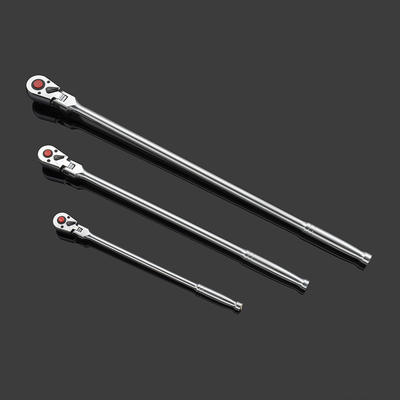
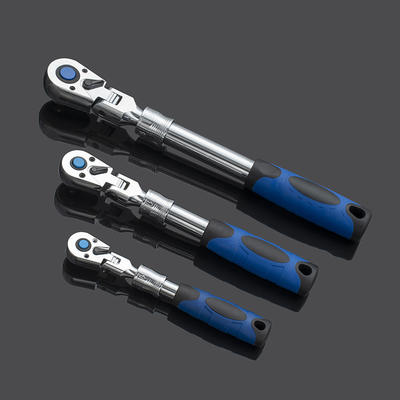
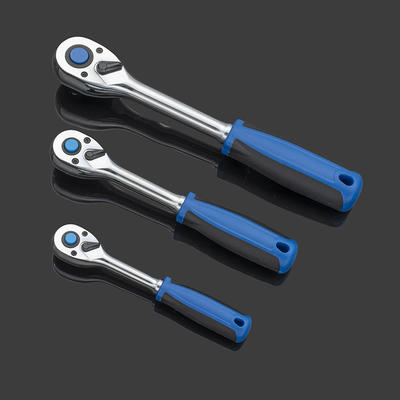
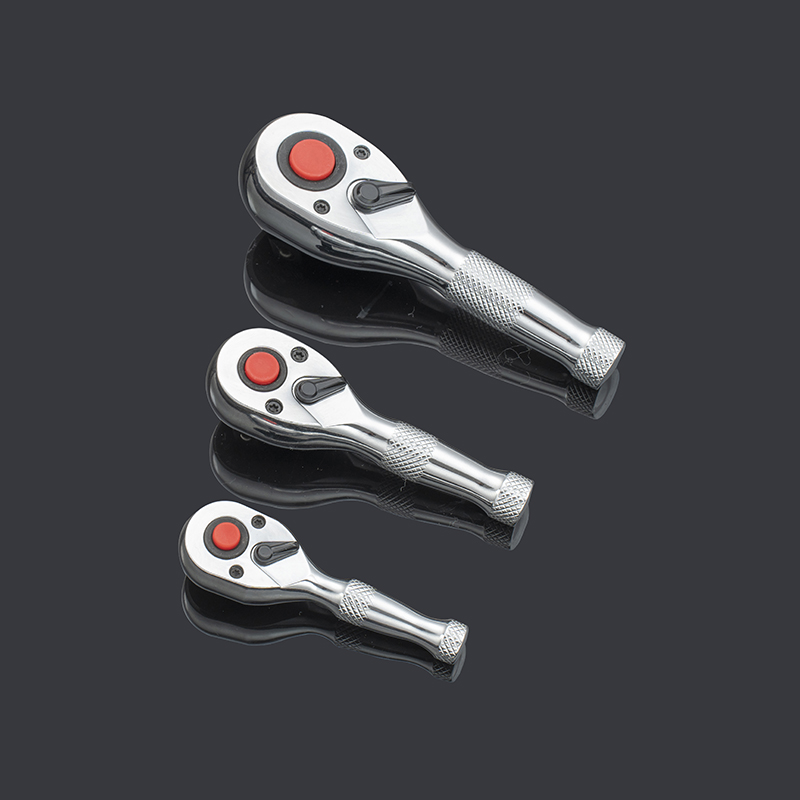
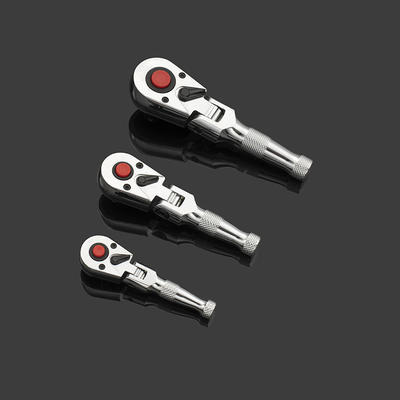
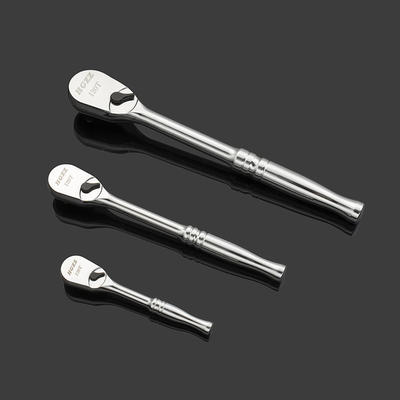
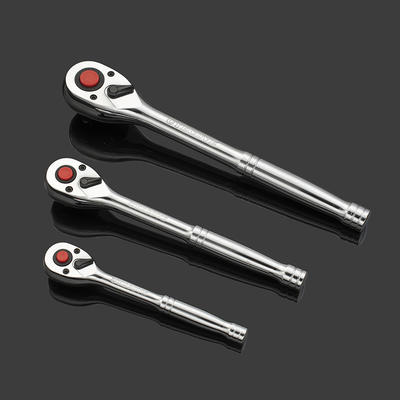
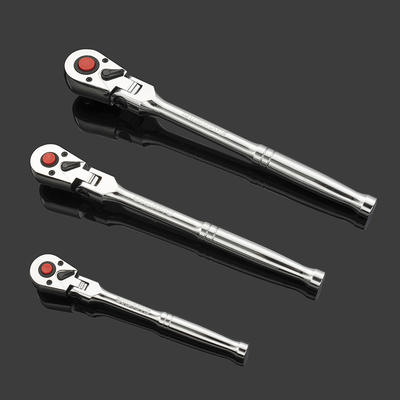
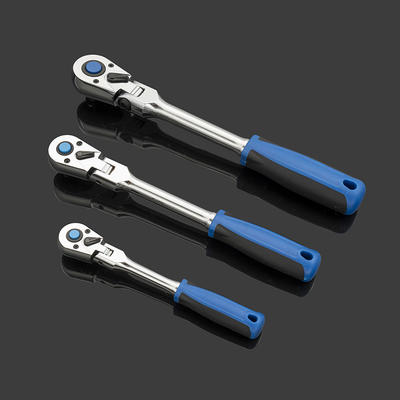
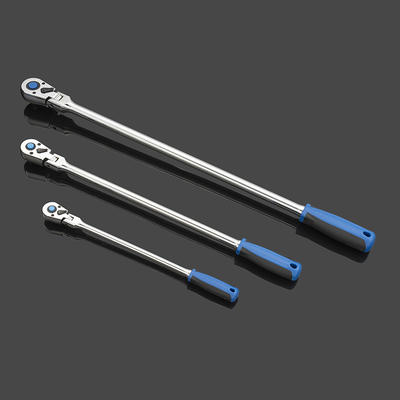
Flexible head extra long ratchet handle
Gear head material 42CrMo is a kind of steel type, belongs to ultra-high strength steel, high streng...
In the realm of mechanical tools, few innovations offer the blend of versatility and specialized function as the extended flexi-head ratchet wrench. This tool has become a cornerstone in professional and DIY toolkits alike, prized for its ability to navigate confined spaces and provide superior leverage. However, the true potential of any extended flexi-head ratchet wrench is only unlocked when the user possesses a fundamental understanding of its core characteristic: the drive square. The drive size is not merely a specification; it is the primary determinant of the tool’s application, defining its torque capacity, socket range, and overall physical profile. Selecting the incorrect drive size can lead to inefficiency, fastener damage, or tool failure.
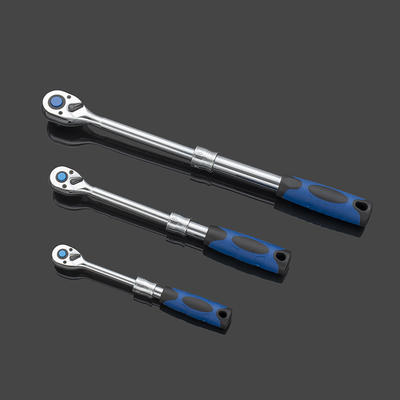
Before delving into the specifics of drive sizes, it is essential to understand the key components that define an extended flexi-head ratchet wrench. This tool is an evolution of the standard ratchet, integrating two critical features that enhance its utility. The first is the extended handle. This design increases the distance from the drive square to the end of the handle, providing a longer lever arm. This allows the user to apply greater torque with less physical effort, a principle fundamental to mechanics. The second feature is the flexi-head, or swivel head. This joint allows the head of the wrench to pivot, typically through an arc of 180 degrees or more. This pivoting action is what enables the tool to access fasteners in obstructed locations where a straight-line approach is impossible. The combination of a long handle and an articulating head makes the extended flexi-head ratchet wrench an exceptionally adaptable tool for a wide array of tasks. When users search for long handle swivel head ratchet or high torque flex head ratchet, they are seeking the unique advantages offered by this specific tool design.
The 1/4-inch drive is the smallest of the three common sizes and is engineered for precision tasks requiring finesse rather than brute force. An extended flexi-head ratchet wrench in this drive size is characterized by its slim profile, lightweight construction, and fine-tooth ratcheting mechanism. The primary advantage of this tool is its access capability. The small drive square necessitates a correspondingly small socket and a thin-walled ratchet head, allowing it to fit into extremely tight spaces where larger drives would be unusable.
The 1/4-inch drive extended flexi-head ratchet wrench is indispensable in fields and applications where small, delicate fasteners are prevalent. In electronics assembly, it is used for disassembling devices with small housing screws. In automotive repair, it is the tool of choice for intricate interior work, such as removing dashboard components, trim panels, and console fasteners. It is also highly effective for working on small engines, like those in lawnmowers or motorcycles, and for assembling furniture or cabinetry where over-tightening can split wood or strip threads. The extended handle, even on this small drive, provides better control than a standard short-handled ratchet, reducing hand fatigue during repetitive tasks. The search term small drive flex head ratchet often leads users to this category of tools, highlighting the demand for precision instruments.
The most significant limitation of the 1/4-inch drive is its low torque capacity. It is not designed for breaking loose stubborn, rusted, or over-tightened fasteners. Applying excessive force, such as by using a cheater bar on the handle, can easily damage the ratchet’s internal mechanism, twist the drive square, or break the socket. Users must exercise caution and use this tool only for its intended purpose: final tightening and loosening of low-torque fasteners. For wholesalers and buyers, understanding that the 1/4-inch drive serves a niche—albeit a critical one—is key to proper inventory and application.
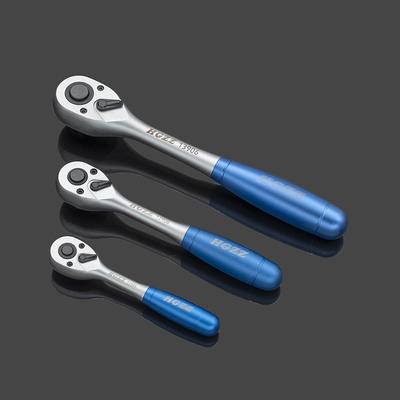
The 3/8-inch drive represents the most versatile and commonly used size in the ratchet family. It strikes an optimal balance between the compactness of the 1/4-inch drive and the raw power of the 1/2-inch drive. An extended flexi-head ratchet wrench in a 3/8-inch drive is often considered the go-to tool for a majority of mechanical tasks, making it a fundamental piece in any comprehensive toolkit. Its versatility is its greatest asset, capable of handling a broad spectrum of fastener sizes, from those slightly larger than what a 1/4-inch drive can manage up to the smaller end of a 1/2-inch drive’s range.
The application range for a 3/8-inch drive extended flexi-head ratchet wrench is exceptionally wide. In automotive repair, it is used for everything from oil pan bolts and valve cover bolts to intake manifold nuts and suspension components. Its extended handle provides the necessary leverage for many of these tasks without being overly cumbersome. The flexi-head is particularly useful for navigating the crowded engine bay of a modern vehicle. For bicycle mechanics, plumbing, and general equipment maintenance, the 3/8-inch drive is often the largest ratchet needed for most jobs. Its popularity is reflected in common user queries like universal drive size ratchet and best all around flex head ratchet. For buyers, stocking a high-quality 3/8-inch extended flexi-head ratchet wrench is essential, as it will see the most frequent use across various customer segments.
The 3/8-inch drive is robust enough to handle moderate to high torque applications when used correctly, but its head size remains compact enough for respectable access. Modern designs often feature a high tooth count (e.g., 72, 90, or even 120 teeth), which results in a very fine ratcheting arc. This fine arc is crucial for working in tight spaces where the swing of the handle is severely limited. The combination of a long handle, a pivoting head, a fine ratcheting mechanism, and a versatile drive size makes this tool an unparalleled problem-solver. It is the one tool that a mechanic is least likely to leave out of their hand for an entire job.
At the top of the common drive size spectrum is the 1/2-inch drive, a tool built for power and durability. An extended flexi-head ratchet wrench in this size is a heavy-duty instrument designed to deliver high torque and withstand significant mechanical stress. The components are larger and heavier across the board: the drive square, the internal pawl and gear mechanism, the head, and the handle are all engineered for maximum strength. The extended handle on a 1/2-inch model is a critical feature, as it provides the long lever arm necessary to generate the substantial torque required for large fasteners.
The 1/2-inch drive extended flexi-head ratchet wrench is the tool of choice for the most demanding applications. In an automotive or truck repair context, this includes tasks such as loosening lug nuts (often the initial crack), suspension work (control arm bolts, strut nuts), crankshaft pulley bolts, and differential plugs. In industrial settings, it is used on large machinery, agricultural equipment, and construction implements. The flexi-head feature is invaluable in these environments, as it allows a powerful tool to be used in awkward positions where a breaker bar or a standard ratchet cannot fit. Search terms like heavy duty flex head ratchet and high torque long handle ratchet are typically associated with the 1/2-inch drive category, indicating a user base with specific, high-strength needs.
While immensely strong, a 1/2-inch drive extended flexi-head ratchet wrench is not indestructible. Its primary limitation is its size; the large head and sockets can preclude its use on smaller fasteners or in confined spaces. Furthermore, while it is designed for high torque, it is still a ratcheting tool. For breaking loose extremely seized fasteners, a solid breaker bar is often a safer and more effective choice, as it places no strain on a ratcheting mechanism. Once the fastener is broken loose, the extended flexi-head ratchet wrench can then be used to efficiently remove or install it. Buyers should note that this tool serves a specialized, power-oriented market, and its construction quality is paramount to safety and performance.
To crystallize the distinctions between the three drive sizes, the following table provides a direct comparison of their key characteristics, typical socket ranges, and primary applications. This summary serves as a quick-reference guide for selection.
| Feature | 1/4-Inch Drive | 3/8-Inch Drive | 1/2-Inch Drive |
|---|---|---|---|
| Primary Characteristic | Precision Tool | Universal Workhorse | Heavy-Duty Power Tool |
| Typical Socket Range | 4mm - 14mm (approx.) | 6mm - 19mm (approx.) | 10mm - 36mm (approx.) |
| Torque Capacity | Low | Moderate to High | Very High |
| Physical Size & Weight | Small, Lightweight | Medium, Balanced | Large, Heavy |
| Ideal Applications | Electronics, interior trim, small engines, delicate assembly | General automotive, plumbing, equipment maintenance, most mechanical tasks | Lug nuts, suspension, crankshaft bolts, industrial machinery |
| Key Advantage | Superior access in confined spaces | Optimal balance of strength and versatility | Maximum torque for the largest fasteners |
This comparison underscores the importance of matching the tool to the task. There is significant overlap, particularly between the 1/4-inch and 3/8-inch and the 3/8-inch and 1/2-inch drives, but each occupies a distinct and vital role. A well-equipped technician will have access to all three sizes to cover the full spectrum of potential jobs efficiently and safely.
Making the correct choice between a 1/4", 3/8", and 1/2" extended flexi-head ratchet wrench involves a practical assessment of the work at hand. The decision-making process should be guided by a few key questions. First, consider the fastener size. While the socket range table provides a guideline, the fastener’s torque specification is a more direct indicator. Low-torque, small-diameter fasteners call for a 1/4-inch drive, while high-torque, large-diameter fasteners demand a 1/2-inch drive. The vast middle ground is the domain of the 3/8-inch drive.
Second, evaluate the working environment. Is it an open area with plenty of room, or a tightly packed engine compartment? A compact flex head ratchet in a 1/4-inch or 3/8-inch drive may be the only tool that can access the fastener. The extended flexi-head ratchet wrench is specifically designed for such challenging access scenarios, but the drive size will ultimately determine whether the tool and its socket can physically fit into the space.
Finally, consider the required force. If the fastener is likely to be seized or requires significant torque to specifications, starting with a 1/2-inch drive is the prudent choice. Attempting this with a smaller drive risks damaging the tool and the fastener. Conversely, using a bulky 1/2-inch drive on a small, delicate fastener is inefficient and increases the risk of over-tightening or stripping the thread. For professionals and enthusiasts who frequently encounter a wide variety of tasks, investing in a complete set of extended flexi-head ratchet wrenches across all drive sizes is the most effective strategy for maintaining productivity and tool integrity.
The functionality of an extended flexi-head ratchet wrench is entirely dependent on the sockets and accessories used with it. The drive size dictates the ecosystem of sockets, extensions, and adapters that the user must maintain. It is critical to use sockets that are rated for the torque capacity of the drive size. Using a 1/2-inch drive socket on a 1/4-inch drive ratchet via an adapter is mechanically unsound, as the small drive is the weak link and cannot handle the torque the socket is built to withstand.
Similarly, extensions and universal joints are vital for maximizing the reach and angle capabilities of the flexi-head. A high-quality extended flexi-head ratchet wrench paired with a comprehensive set of sockets and accessories forms a complete system for tackling complex mechanical problems. For wholesalers and buyers, this presents an opportunity for bundled offerings. Promoting a long handle swivel head ratchet alongside a corresponding socket set is a logical and valuable proposition for the end-user, ensuring they have the right components for the job from the outset.
The extended flexi-head ratchet wrench is a testament to the evolution of hand tools, combining leverage and articulation to solve complex mechanical challenges. However, its advanced design does not negate the importance of fundamental principles. The drive size remains the foundational element that governs the tool’s purpose, capacity, and safe operating parameters. The 1/4-inch drive offers precision for delicate tasks, the 3/8-inch drive provides unmatched versatility for general use, and the 1/2-inch drive delivers the power necessary for the most demanding applications. Understanding these distinctions is not just a matter of technical knowledge; it is a practical necessity for efficiency, safety, and the longevity of both the tool and the fasteners it is used on. By carefully selecting the appropriate extended flexi-head ratchet wrench for the task, from the compact 1/4-inch to the powerful 1/2-inch model, users can ensure they are equipped to handle any job with confidence and proficiency.

Committed to the production of torque wrenches, ratchet wrenches, sleeve tool sets and other auto and hand tools products.
 Add: Yiqiao Town, Xiaoshan District, Hangzhou City, Zhejiang Province, China. 311256
 Tel: +86-18072832111
 E-mail: [email protected]
Copyright ©2023 Hangzhou Hao Gong Tools Co., Ltd. All Rights Reserved
Mini Ratchet & Digital Torque Wrench Set Suppliers
